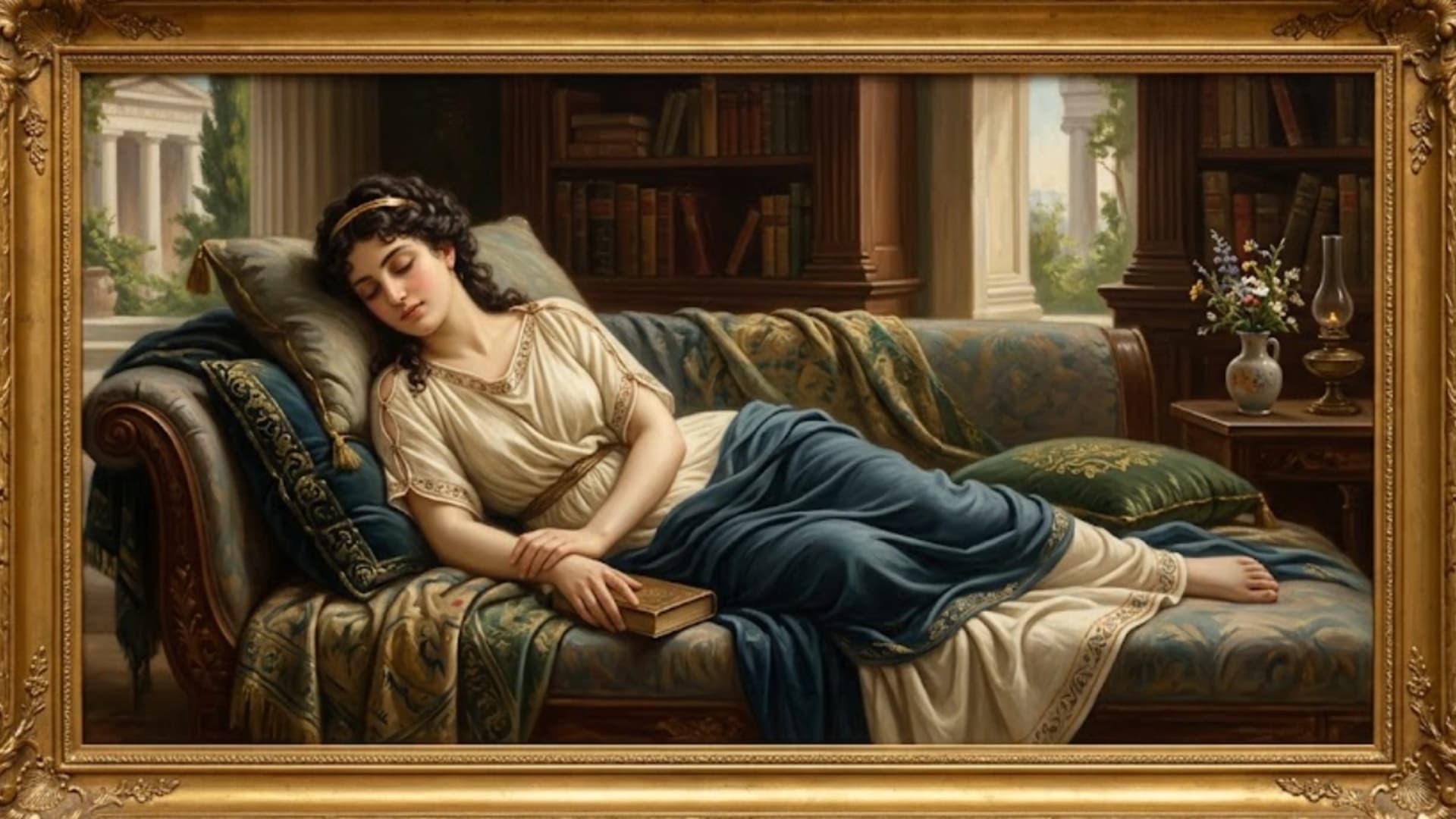

There are stories that stay in culture for centuries, but quietly change shape as they travel. What begins as something complex and grounded in human action slowly becomes something easier to hold—an image, a symbol, a moment stripped of its full weight.
Take the story of Lady Godiva. At its core, she is not a spectacle but a person making a deliberate political choice: riding through the city as an act of pressure against oppressive taxation. It is a story about endurance, and about the body being used not for display, but as leverage in a system that would otherwise refuse to listen.
And yet, over time, what tends to remain is the simplest, most striking part of it. The image of the ride itself detaches from its purpose. What was once an act of civic resistance becomes something easier to remember, easier to repeat—something that can be softened, aestheticized, even made light of. The meaning doesn’t disappear entirely, but it thins out, as if the story has been drained of its internal weight.
This seems to happen often with women in history. Their actions are not forgotten, exactly, but they are reshaped into forms that are more easily consumed: symbols, warnings, curiosities, moral lessons, or visual icons. The complexity of what they did can still be present, but it sits underneath a more dominant surface image that tends to take over.
There is also something curious in how suffering itself is treated in stories. In many narratives, especially modern ones, women’s suffering is deeply present—it is often what sets the story in motion, what raises the stakes, what gives the world its emotional gravity. And yet, it does not always carry the same weight of transformation that male suffering tends to hold.
When men suffer in stories, it is often shaped into a kind of passage. Pain becomes a trial, and the trial becomes identity. It is understood as something that changes who they are becoming, something that they carry forward into heroism or recognition.
With women, suffering more often functions differently. It is felt, it is centered, it is often what we are asked to care about most deeply—but it is not always what defines their arc in the same way. Instead, it can become the reason someone else acts, or the emotional atmosphere that surrounds someone else’s journey.
That difference is subtle, but it accumulates.
Even in storytelling today, especially in film and television, there is a pattern where women’s pain is deeply visible but not always fully authored. It moves the plot. It raises the stakes. It gives emotional clarity to the world around it. But it is less often treated as something that belongs entirely to the woman experiencing it in the sense of transformation or resolution.
It creates a strange imbalance: women are often the emotional center of a story, but not always the ones through whom the story’s meaning is finally resolved.
And so the question that lingers underneath all of this is not just about misrepresentation, but about structure. About who gets to have their suffering interpreted as becoming, and who gets theirs interpreted as significance for someone else’s becoming.
Because in the end, stories don’t just record what happened. They decide what kind of meaning different lives are allowed to carry.
Then we can let it settle rather than conclude it sharply—more like the thought continuing after the page ends.
And maybe that is what sits underneath all of this.
That stories are never only about what people did, but about what kinds of lives a culture is able to recognize as fully belonging to themselves. Some lives are allowed to become meaning, and some are turned into background. Some are allowed to become journeys, and others become moments—beautiful, tragic, striking, but contained.
Even when we look back at figures like Lady Godiva, what we are really seeing is not just the past, but the way the past has been edited into something we can carry. The weight of intention becomes lighter. The edges of agency blur. What remains is often what is easiest to hold, not necessarily what is most true.
And still, if you look closely, the original shape is never entirely gone. It sits underneath the version that has been repeated—quietly insisting that there was more there than the surface ever held.
Maybe that is the work of looking again at these stories. Not to correct them into something perfect, but to notice the layers—to hold both the image and what it once meant at the same time.
To remember that behind every simplified story, there was once a full person moving through a full world, making choices that mattered to them in ways no symbol can quite contain.
And to let that awareness change how easily we accept the versions we’ve been given.
Not with certainty, but with a kind of gentler attention.
As if the story is still unfolding, just slightly out of reach.