
There is a particular kind of insult that sounds almost like an intellectual compliment.
Perhaps you simply don’t understand.
It is a remarkably useful sentence.
It doesn’t call you stupid. It doesn’t have to. It doesn’t even have to address what you have actually said. It merely places the speaker above you, on the comfortable side of a line called knowledge, while placing you on the other side with the children, the amateurs, the hysterical women, the people who haven’t done enough research.
I encountered a version of it recently during an argument about artificial intelligence and art.
My friend, who is a brilliant artist, was making a case against “AI Art.” The term makes me nauseous but for the sake of this work, I will use it.
A man came into her comments and tried not just to have a discussion, but to obliterate her as a female artist.
I had made what I thought was a fairly straightforward argument: that there is a meaningful distinction between having a creative vision and actually executing a work of art. I wasn’t arguing that prompting an AI system requires no thought. I wasn’t arguing that AI cannot be useful. I wasn’t even arguing that a person who uses AI has no creativity.
I was asking a different question.
If I describe an image to a generative system and the system creates the image, how much of that image did I actually make?
The response was, essentially: You don’t understand AI. Perhaps you haven’t used it enough.
It was such a familiar sentence that I almost laughed.
Because I have spent my life making things.
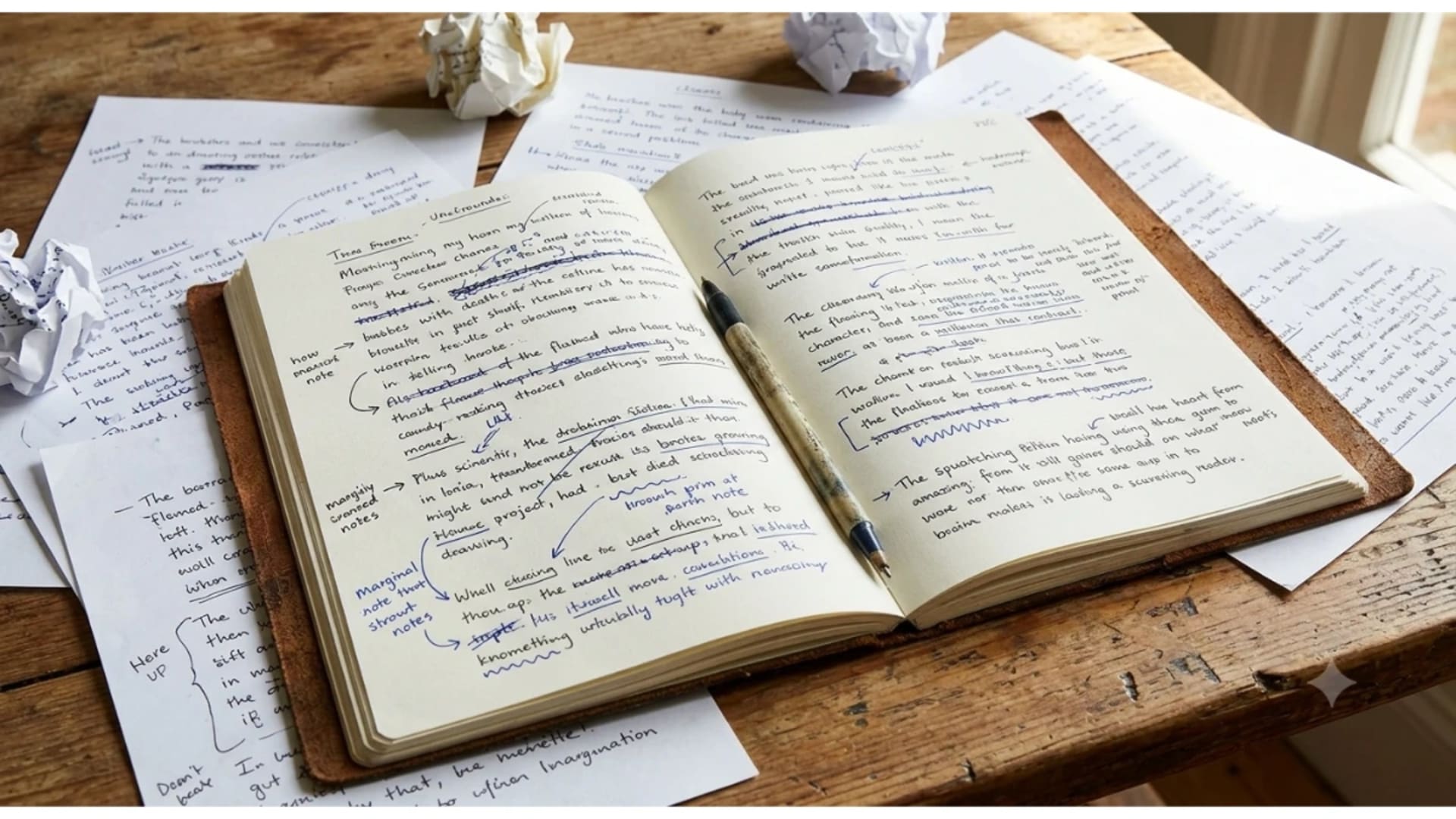
I have written thousands of articles and stories. I have sat with blank pages and turned them into sentences, scenes, characters, arguments, endings. I know what it means to have something in your head that does not yet exist in the world and then have to drag it, word by word, into existence.
And yet, in that conversation, none of that mattered.
The question was not answered.
My argument was not dismantled.
Instead, my authority to make the argument was questioned.
And that is when I began thinking about something much larger than artificial intelligence.
Women have been told they do not understand for a very long time.
Long before the internet, before social media, before algorithms and generative models and comment sections, women were creating, thinking, writing, inventing, observing, teaching, organizing, painting, composing, researching, and arguing.
But creation was not necessarily the problem.
Authority was.
A woman could write a novel, but people could decide that women were naturally suited to sentimental fiction and therefore her achievement was somehow less intellectually serious.
A woman could produce scientific observations, but her authority could be questioned because she lacked the credentials men were allowed to accumulate.
A woman could be an expert and still be treated as an assistant.
A woman could know something and still be asked to prove that she knew it.
And sometimes the dismissal was wonderfully subtle.
Not You’re stupid.
Just:
Are you sure?
Perhaps you misunderstood.
You don’t really know how this works.
Have you actually studied this?
I suspect you haven’t had much experience with the subject.
The language changes.
The mechanism doesn’t always.
The old world had universities, professional societies, publishers, academies, newspapers, corporations and institutions that could decide who was allowed to be an authority.
The internet was supposed to change some of that.
Suddenly, theoretically, anyone could publish.
You didn’t need a newspaper to print your essay. You didn’t need a gallery to display your photographs. You didn’t need a publisher to put your words into the world. You could build an audience from your bedroom.
The gate had been opened.
But opening the gate does not necessarily abolish the gatekeeper.
It can simply change his job.
He no longer has to prevent you from entering the room.
He can enter the room with you and explain why you don’t belong there.
This is one of the strange contradictions of the digital age. We have democratized access to expression without necessarily democratizing credibility.
Everyone can speak.
But everyone is not necessarily granted the same presumption of competence.
And technology has given us a particularly interesting new vocabulary for doing this.
You don’t understand the algorithm.
You don’t understand the technology.
You don’t understand the economics.
You don’t understand the science.
You don’t understand AI.
Sometimes those statements are perfectly legitimate. People really can misunderstand things. Expertise is real. Technical knowledge matters. Nobody should be immune from correction merely because they are a woman.
That isn’t the argument.
The question is what happens when “you don’t understand” becomes a substitute for actually demonstrating that someone is wrong.
Because there is a world of difference between:
“Your claim is incorrect, and here is why.”
and:
“You are not sufficiently knowledgeable to have made the claim.”
The first engages the argument.
The second establishes a hierarchy.
And women have historically been extremely familiar with hierarchies of credibility.
This is why the little AI argument stayed with me.
The person I was speaking with was an artist and art director. He made an interesting argument about vision and execution. I agreed with part of it. Of course the concept matters. Of course the vision matters. Of course the person directing a creative project can make meaningful artistic decisions.
But when I questioned whether directing a generative system is equivalent to personally executing an artwork, the discussion shifted.
Suddenly, “perhaps I simply hadn’t used AI enough.” In his mind.
That was the moment the argument became more interesting than the subject.
Because why is disagreement so often interpreted as ignorance?
Why does a woman who says “I disagree with your premise” so frequently receive the answer “You don’t understand”?
And why is the burden so often placed on her to establish that she has the right to disagree?
There is something almost comical about it when you step back.
Imagine two people discussing art.
One person says, “I have a different understanding of authorship.”
The other says, “Perhaps you don’t have enough experience to understand authorship.”
Notice what happened.
The subject quietly changed.
We are no longer discussing art.
We are discussing whether she is qualified to discuss art.
That move is incredibly powerful because it can continue forever. There is always another credential. Another book you haven’t read. Another program you haven’t used. Another technical detail you don’t know. Another expert you haven’t consulted.
The conversation becomes an obstacle course designed to establish that you haven’t earned the right to speak.
And women have spent centuries being told to earn that right.
The irony is that women are now producing enormous bodies of work outside traditional institutions.
We publish essays.
We write books.
We build businesses.
We make films.
We produce music.
We create art.
We conduct research.
We build audiences.
We teach ourselves software.
We become experts in subjects that didn’t exist when our mothers were young.
We document our experiences and place them into the public record.
And yet the old question remains surprisingly persistent:
But are you really qualified?
Sometimes the answer is yes.
Sometimes it is no.
Sometimes the person asking is genuinely interested in establishing expertise.
And sometimes the question is simply another way of saying:
I don’t like what you’re saying, and I would prefer to disqualify you rather than answer you.
Digital misogyny doesn’t always look like hatred.
Sometimes it looks like condescension.
Sometimes it looks like a correction nobody asked for.
Sometimes it looks like a man explaining your own field back to you.
Sometimes it looks like assuming that a woman who disagrees must not have understood.
Sometimes it looks like deciding that confidence in a woman is arrogance while the same confidence in a man is expertise.
And sometimes it looks like something so small that it would seem ridiculous to write an essay about it.
A sentence in a comment section.
A stranger making an assumption.
A little perhaps you haven’t spent enough time with this.
Except these little moments accumulate.
That is how culture works.
Not only through dramatic acts of discrimination, but through thousands of tiny negotiations over who gets to be believed.
The internet has given women something previous generations fought very hard to obtain: a public voice.
The question now is whether we have learned to listen to that voice without first demanding proof that it deserves to exist.
I don’t need every person to agree with me.
I don’t even particularly want that.
I want disagreement to remain intellectually honest.
Tell me I’m wrong.
Show me where.
Challenge my premise.
Bring me evidence.
Make me reconsider something.
I am a writer. I live for that.
But don’t tell me I don’t understand simply because I have arrived at a conclusion you don’t share.
Because that is an old trick.
And women have heard it before.
The technology is new.
The internet is new.
The vocabulary is new.
But the underlying question is very old:
Who gets to say, “I know”?
And perhaps the next stage of digital equality is not simply giving everyone a microphone.
Perhaps it is learning to stop deciding whose voice must first prove that it deserves to be heard.