
Once upon a time there was a girl who dreamed of a man, and there was a man who dreamed of running with a package tucked under his arm along the asphalt of a road, black and grey like all those roads whose ending you can never quite see, a bit like when you think about the future and it feels like a series of frames you’re supposed to read backwards, except you don’t have the mirror, so you’re screwed.
That’s exactly how it was in that dream.
She was sitting on the side of that road, watching him run without really knowing where he was going. He felt he had to deliver that package somewhere, and that it was urgent, too. So he ran and ran, while the girl watched him, slightly puzzled, because the more he sped up, the less he seemed to get anywhere. It always looked like he was on the last hundred meters, until there was a huge bang and the circus cannon went “boom”, except no, it wasn’t the circus cannon, it was the package exploding with a “thomp”. But whether it was a thomp or a boom, the man fell forward, and rolling badly on the ground he looked like he’d stay there for quite a while.
And the old man who was dreaming of the grey road he rode along on his moped, took off his helmet and said, “You really have to tell this story.”
The man on the ground, sitting up, confirmed, “It’ll make a great story.”
“How? Weren’t you dead?” she objected.
But without paying her much attention, the man stood up and, whistling, walked away with his package under his arm, this time slowly, without rushing. When he passed in front of the audience, he bowed, and they applauded so loudly that the sides of the road deflated, as if until that moment it had been the crowd making it so wide, and now it was just a small country lane.
Once upon a time there was a girl who was sleeping, and while she slept she wandered through other people’s dreams, or maybe it was the others who came to her house, like when you’re on a bus and you feel like you’re watching your neighbour’s life go by.
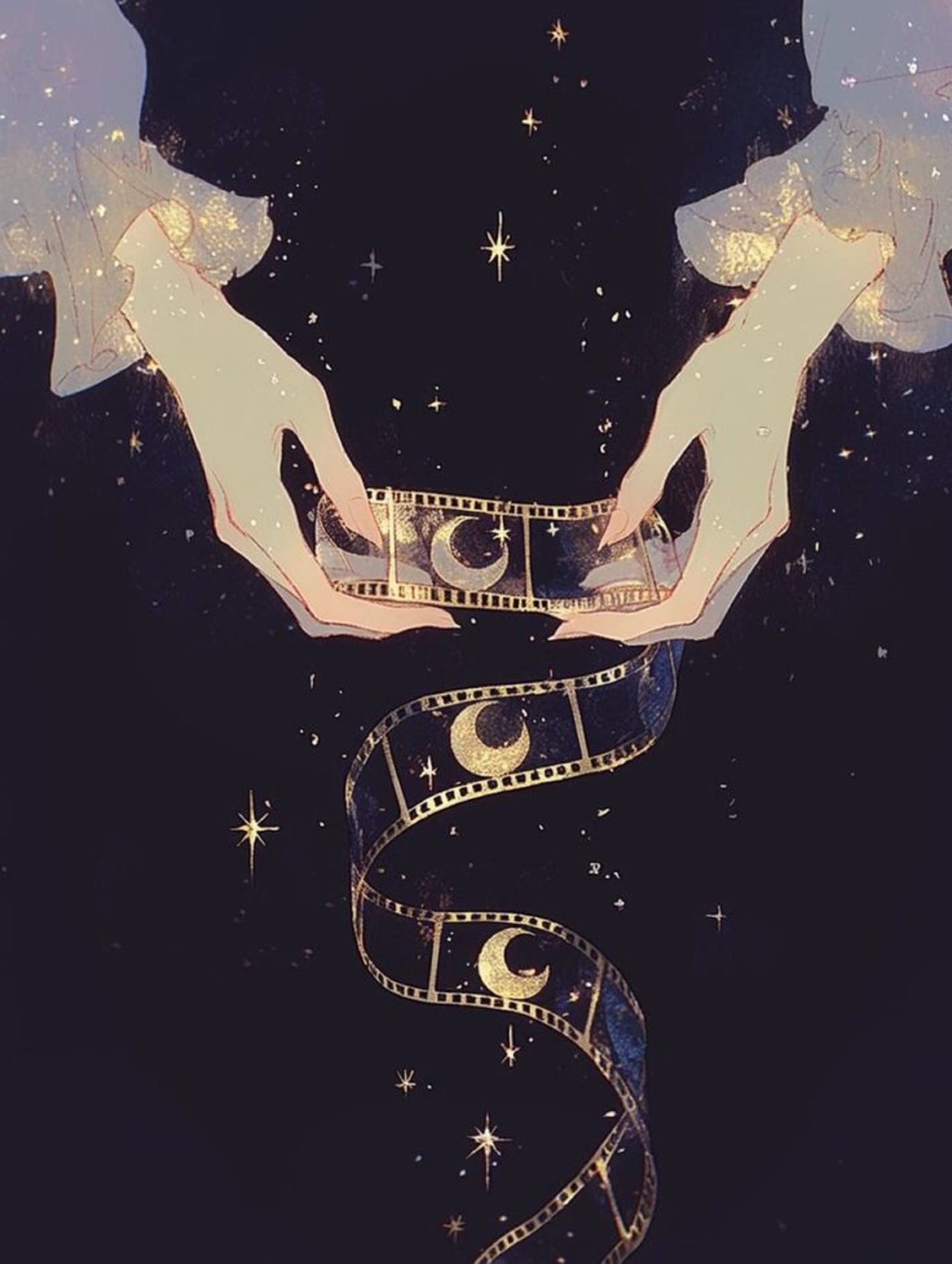
In her dreams it was a bit like watching a movie being made right in front of your eyes, with seamstresses stitching the frames together to make a nice blanket to lay over the television. And while she slept, she could even think. But the girl didn’t really know how to tell the story properly, so she needed to find a poet: one of the good ones, though maybe not too good, she thought, because then he’d be too snobbish.
So she dreamed of one who, while trying to untangle the thread of his inspiration to rewind the ball of yarn that had been knotted for far too long, had taken up a normal job.
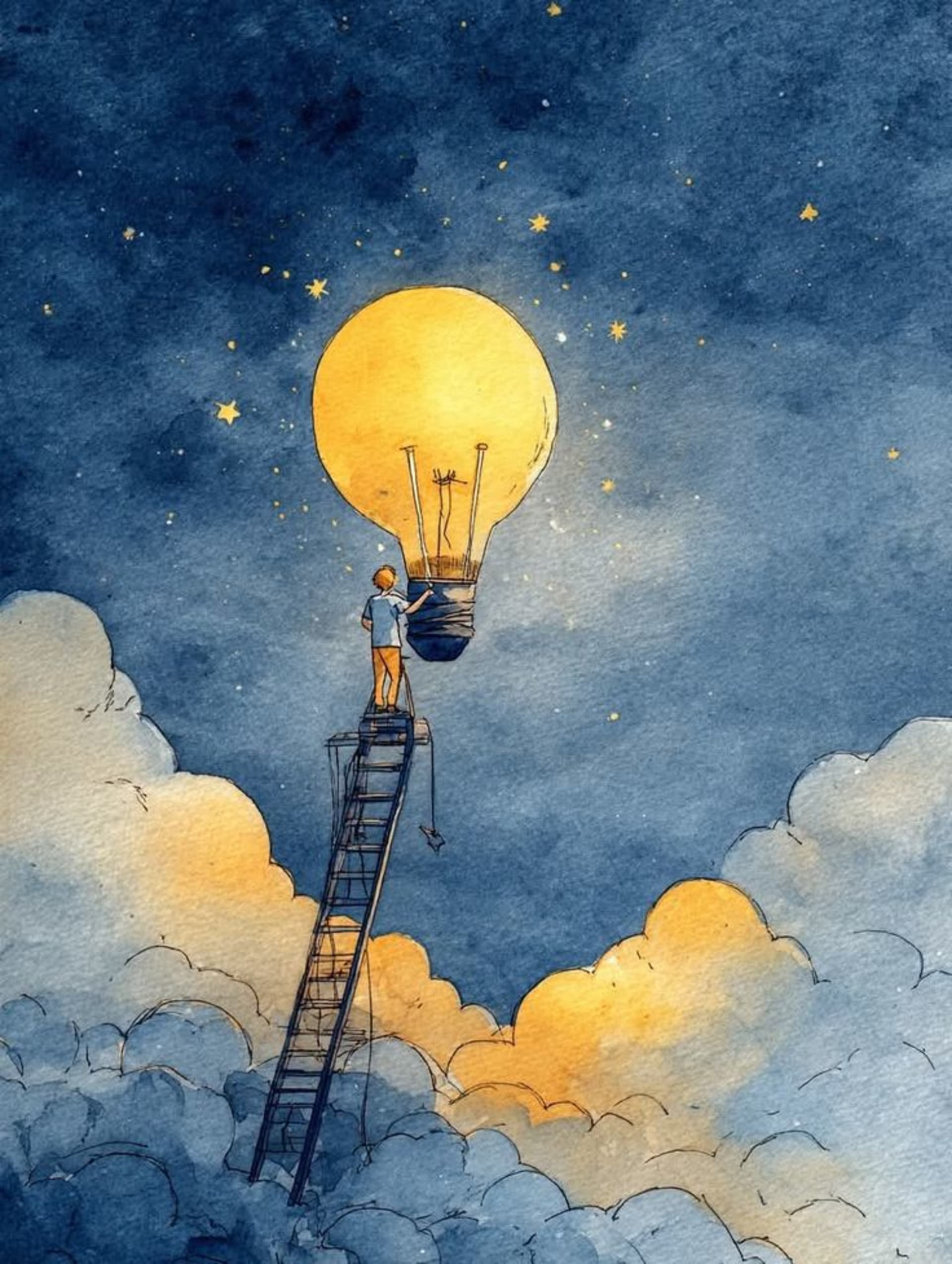
And what could a poet possibly do in the world of dreams, if not turn the lights on?
Turn the lights on? And how did he do that?
You must know that the world of dreams is made of two parts that fit together in reverse, but not because they were put there by mistake. In the world of dreams there is only one sky, and only one set of stars, and when something is shared, what can you do except agree to divide it?
So there were star‑poets who, standing at their windows looking at the sky, gathering the threads of their ideas, now tangled among planets and the Milky Way, shot pebbles with a slingshot to turn off the stars.
And what aim our poet had!
The girl was dreaming of one who, when children with sleep‑heavy mouths said, “Poet, turn off the lights, please,” would show how good he was by shooting a single pebble that rippled like in a pond, shutting down all the lights at once. And not every poet could do that job. You needed one who slept very little, one who in the morning would turn the lights back on from the other side before clocking out and going to bed.
What did the star‑poet dream while the girl dreamed of him?
He didn’t dream.
He thought about how to rewind the threads to stitch together the scattered frames on his bed. He’d been trying for a long time, but he always lacked the thread to finish his work and start a new one. And besides, he got bored: what a bore, sewing all those pieces together, when he wanted to invent new ones. And anyway, he couldn’t dream: a star‑poet wasn’t allowed to, otherwise it would create too much chaos.
“So what a drag,” you might say, “a poet who can’t dream; what does he even write?”
And so the story ends here and we all go home, says the writer.
“Noooo!!!” screams the class.
So what was there?
There was once a little girl who dreamed of a star‑poet who, since he couldn’t dream, was dreamed by her.
That way she could give him a dream.
And since she couldn’t do the splits but was lightning‑fast at climbing, she climbed up the threads scattered across the sky and helped the poet, who finally managed to rewind his thread and finish sewing his blanket. But she didn’t stop there. She also taught him how to swing on those threads, like when you swing your brain.
“See,” she told him, “the important thing isn’t jumping from one side to the other, but climbing with your mind, and once you’re up there, letting it swing between something old and something new, looking for what’s in between.”
“And what’s in between?” he asked.
“Something you haven’t thought yet. There’s always something you haven’t thought, or a new thread to climb. And even if you don’t dream, if you think, it’s a bit like dreaming.”
“The important thing is to wind the spaghetti properly around the fork of your brain,” said the little girl, then she closed her head and left.
“What a strange child,” said the poet, but only for a moment, because the moment flew away and carried the blanket into the sky.
Now, among the stars, you could see a film where entire galaxies, like train cars at full speed, dove into the blue sea, and the sun opened its big mouth to swallow the moon, which in turn swallowed a huge green fish, as big as a cannon that shot bubbles. And every night, after turning on the lights on his side, the poet hung from his threads, climbing from one frame to the next.
Now he didn’t need to dream anymore.
It was enough to close his eyes and think to imagine all the dreams he wanted.