

The year was 1756, and Bengal was the undisputed golden bird of the crumbling Mughal Empire. It was a land woven with fine silk, rich spices, and overflowing coffers. But as an old Indian saying goes, where there is sweet jaggery, the ants will soon gather. The true tragedy of Bengal, however, was not the ants outside, but the termites within.
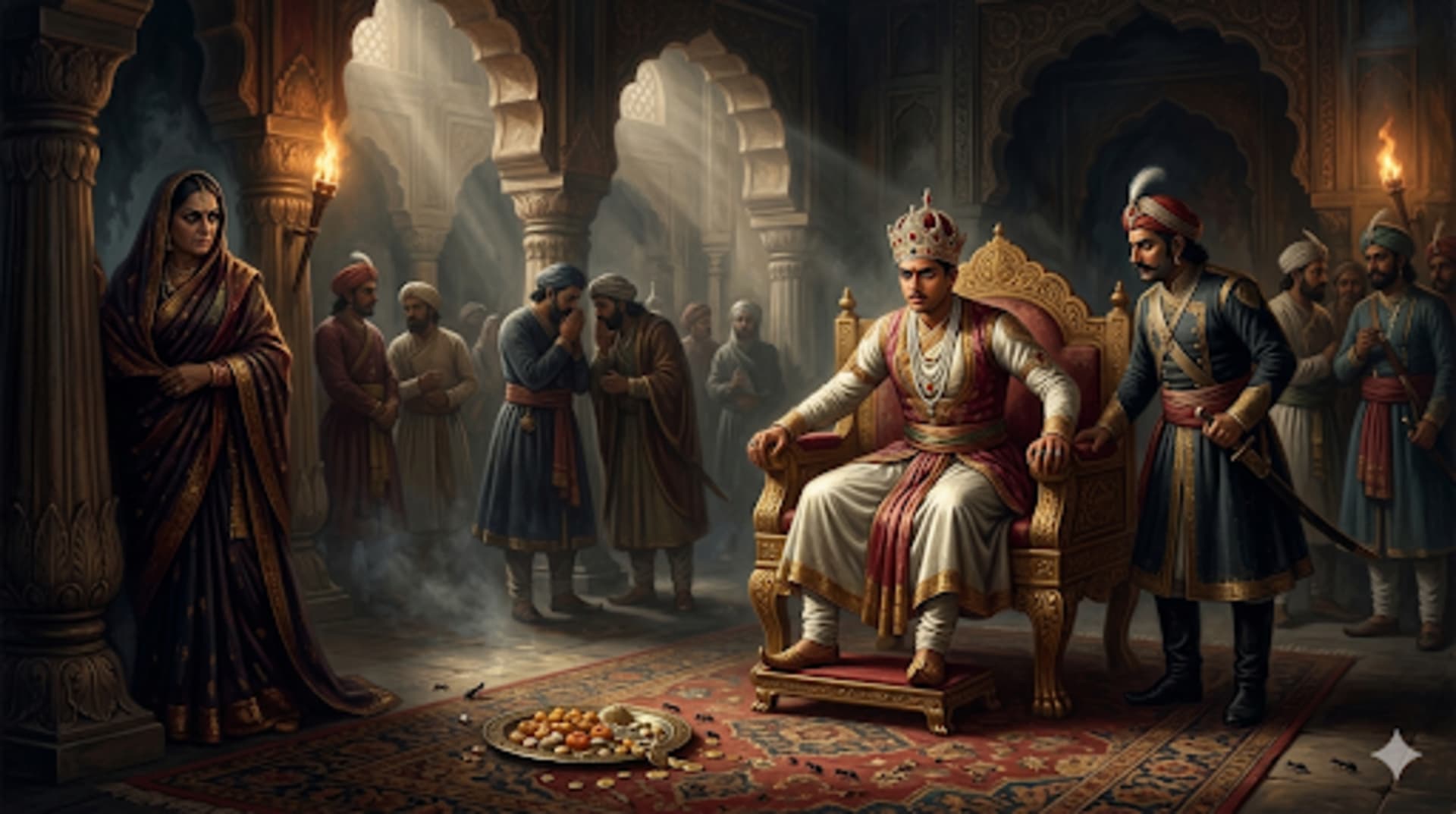
At the center of the storm was the young Nawab, Siraj-ud-Daulah. Fierce, passionate, and fiercely protective of his motherland, he ascended the throne barely in his twenties. Yet, the crown on his head felt more like a bed of thorns. His rise had sparked bitter succession disputes within his own family. His wealthy aunt, Ghaseti Begum, seethed with jealousy, while his trusted commander-in-chief, Mir Jafar, secretly eyed the throne for himself. It is the oldest and saddest story of our soil: when the fences start eating the crop, who can save the field? This deep internal division in India was the very crack through which the wind of ruin would soon blow.
Waiting patiently outside those cracked doors was the British East India Company.
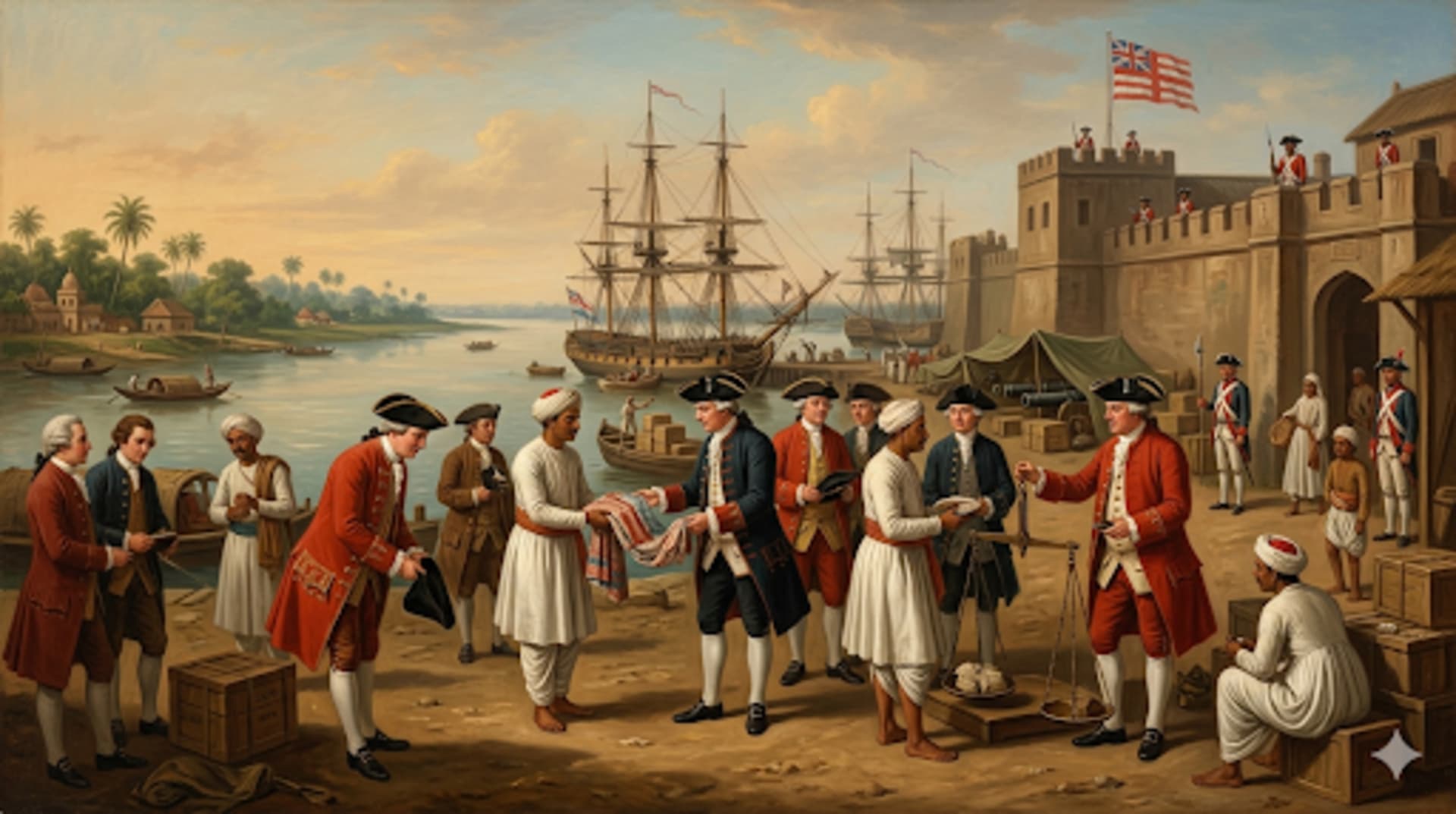
To the naked eye, they played their part beautifully. They were just the EIC—humble foreign merchants pleading for a few trading posts and minor tax breaks. But behind their polite bows lay an appetite to swallow an empire. Siraj-ud-Daulah, however, refused to turn a blind eye. Tired of their illegal fortifications in Calcutta and their arrogant refusal to pay taxes, the young Nawab marched his forces in 1756 and captured Fort William.
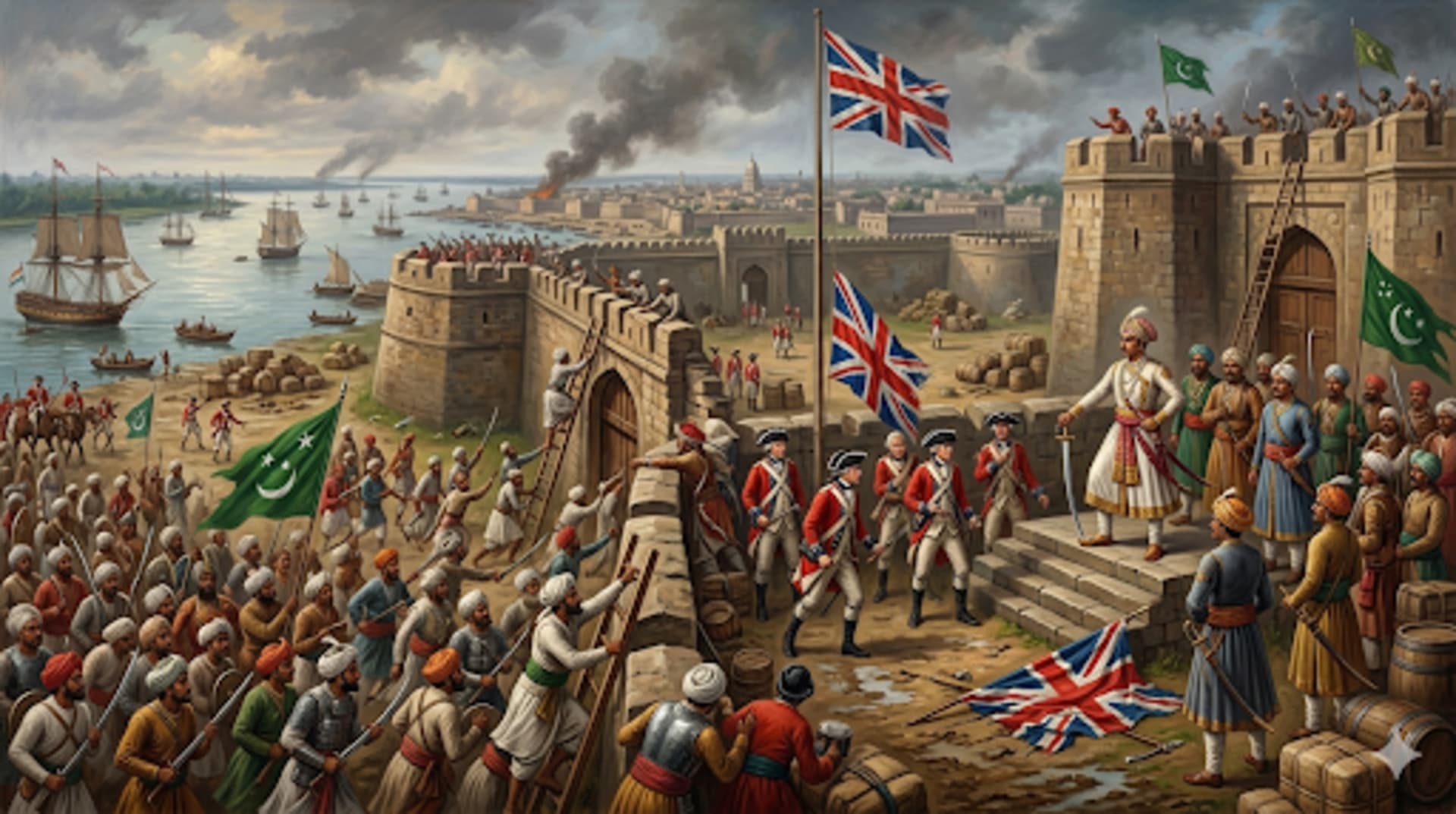
He thought he had crushed the snake in the grass.
He was terribly wrong. The British did not forget, and they certainly did not forgive.
To exact their revenge, the Company sent Robert Clive. Clive was not just a soldier; he was a master architect of deceit. He understood a painful truth about our history: you do not need a massive army to defeat an Indian king if you have enough gold to buy the greedy men standing next to him.
Rather than preparing for a fair fight, Clive started weaving a web of betrayal. He reached out to the traitors hiding in the Nawab’s own durbar (court). He found willing partners in the ambitious Mir Jafar, the fabulously wealthy banker Jagat Seth, and the cunning merchant Omichand. In the hushed shadows of the night, the fate of millions was auctioned off. The deal was struck: the EIC would bankroll Mir Jafar’s rise to the throne, and in return, Mir Jafar would hand over the keys to Bengal's sovereignty.
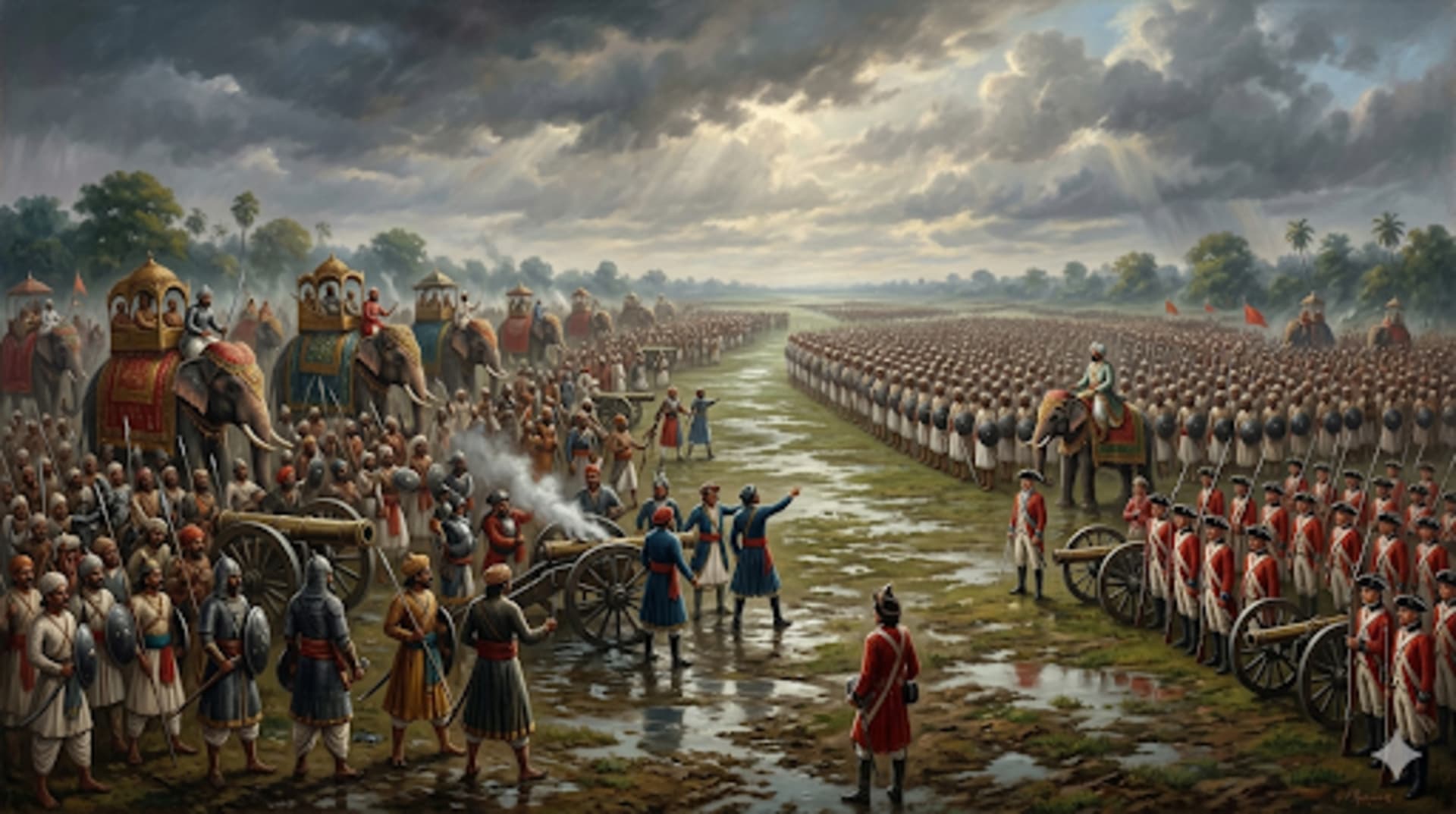
The climax of this grand betrayal arrived on the humid, monsoon-soaked morning of June 23, 1757, in the mango groves of Palashi—which the British anglicized to Plassey.
On paper, the battle was a joke. Siraj-ud-Daulah arrived with a terrifying force of nearly 50,000 men, heavy artillery, and armored war elephants. Robert Clive stood waiting with a mere 3,000 soldiers. But Plassey was never meant to be a battlefield of honor; the script had already been written.
As the cannons roared, a sudden, fierce downpour soaked the Nawab’s unprotected gunpowder. Still, his truly loyal general, Mir Madan, fought like a wounded tiger until he fell taking a bullet. Panic set in. Desperate and realizing the tide was turning, the young Nawab rushed to his uncle, Mir Jafar. In a moment that would break the heart of any Indian, Siraj took off his royal turban and placed it at the traitor's feet, pleading, "Save the honor of Bengal."
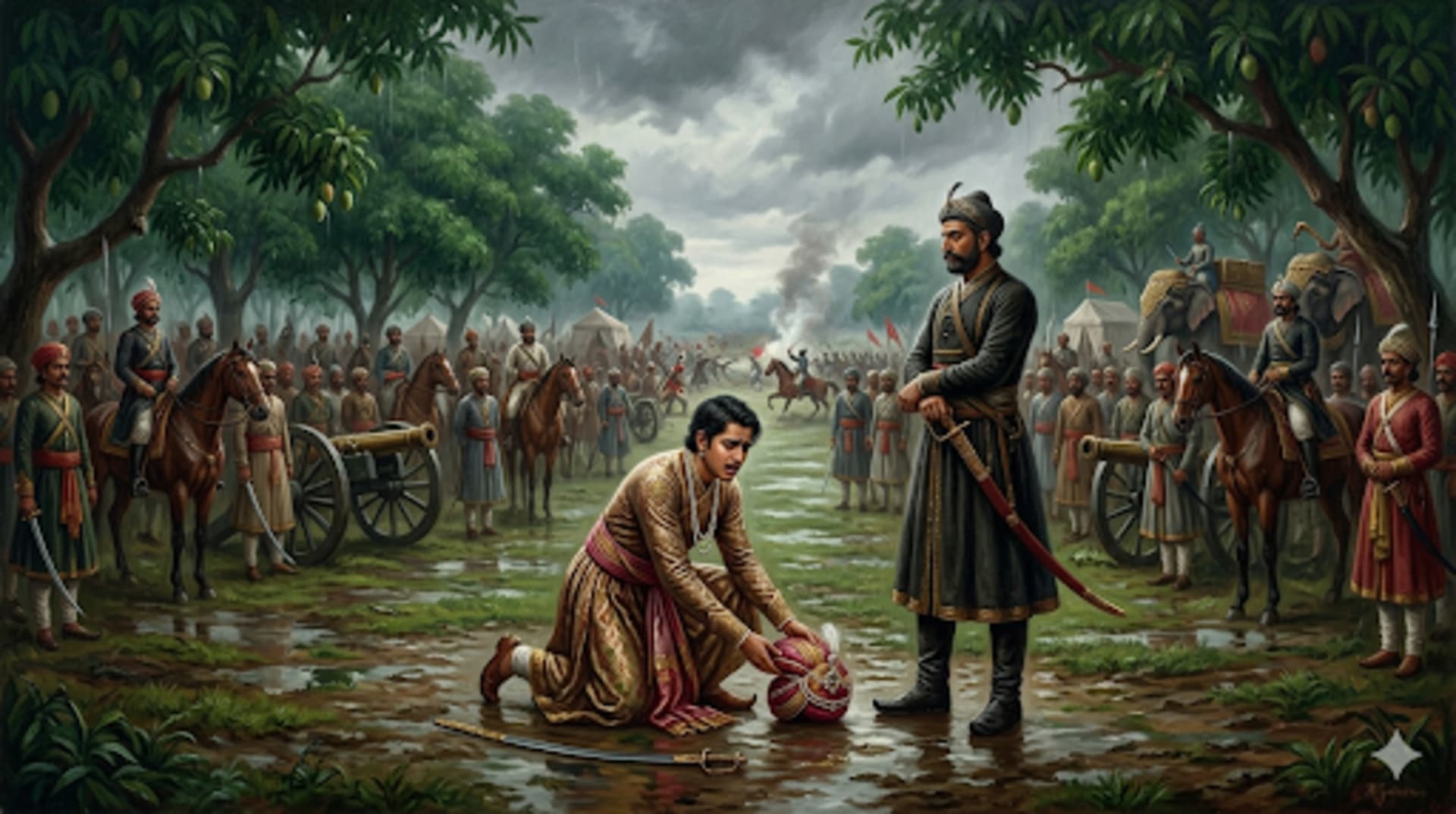
Mir Jafar stood as cold and unmoving as stone. His troops—the vast majority of the Nawab's army—stood still, their swords remaining in their sheaths. They just watched as their motherland was sold.
The writing was on the wall. Betrayed by his own flesh and blood, Siraj-ud-Daulah was forced to flee, only to be captured and assassinated in the dark days that followed.
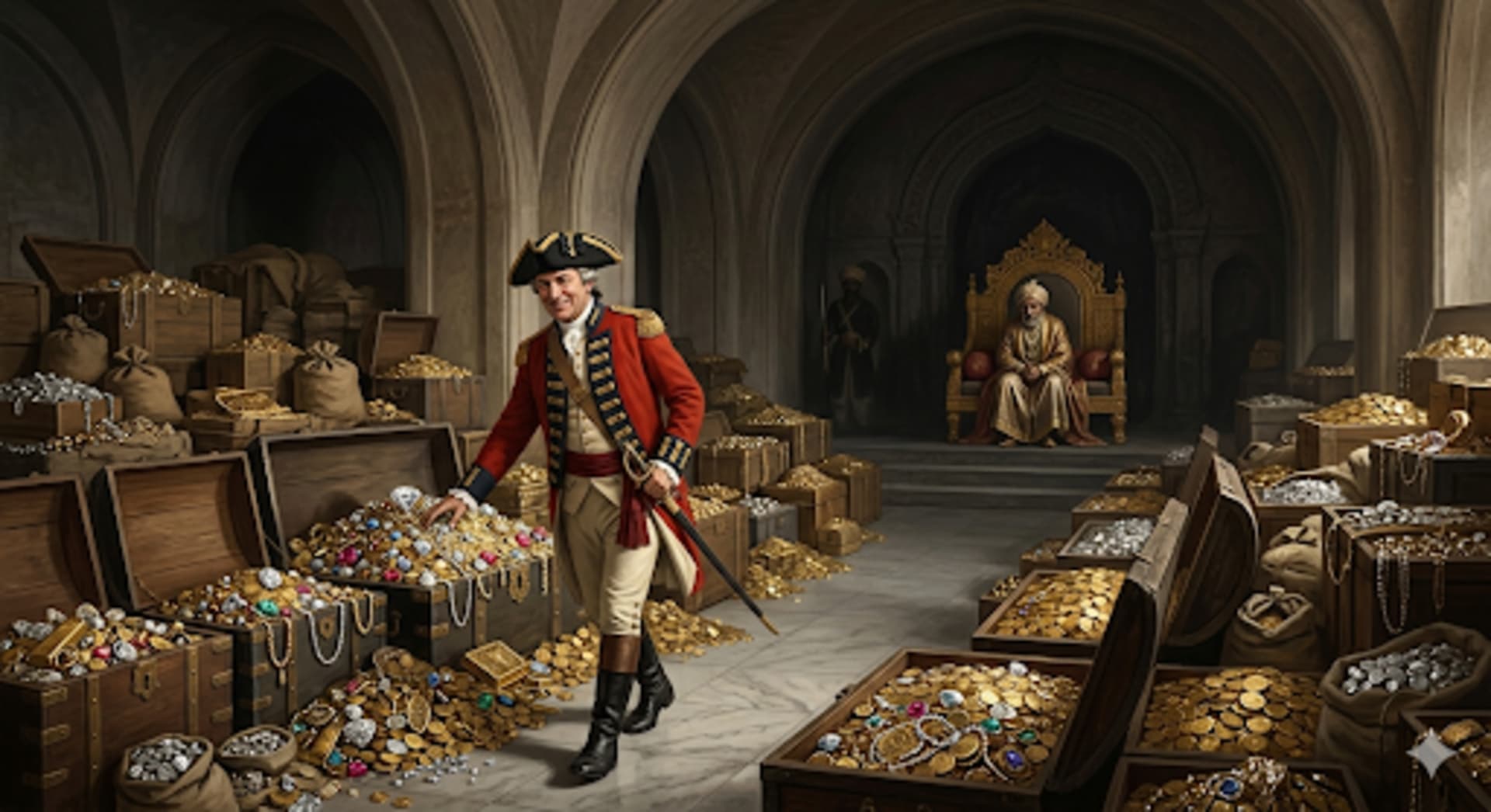
Robert Clive confidently marched into the treasury of Bengal, and Mir Jafar was handed his puppet throne. But the illusion shattered quickly. Mir Jafar soon realized that he had merely traded his own nephew for a far more ruthless master. The EIC dropped their merchant masks entirely, transforming overnight from traders into the cruel overlords of a subcontinent.
So, was Plassey a brilliant military victory? The Western history books might proudly call it a battle. But ask the soil of Bengal, and it will echo the bitter truth. It was no battle. It was a mere conspiracy—a corporate hostile takeover made possible only by our own internal betrayal.
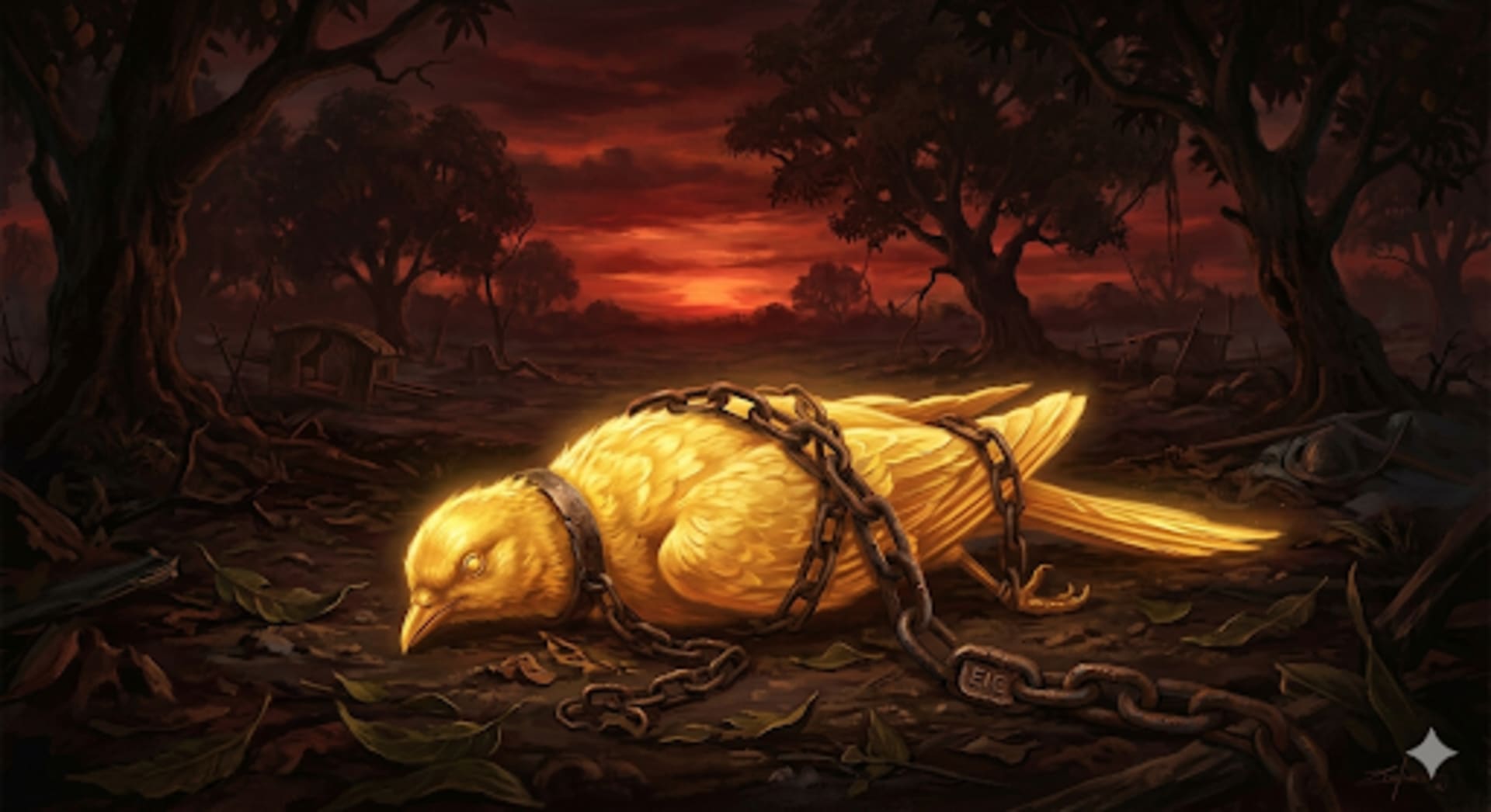
And so, as the sun set over the blood-soaked mango groves of Palashi, a long, dark night descended upon the subcontinent. The fall of Siraj-ud-Daulah was not an end, but a terrifying beginning—the absolute dawn of the era of colonization. The Company, having tasted the boundless wealth of Bengal, would soon cast its iron net over the rest of the country. India, the fabled Sone ki Chidiya (Golden Bird) that had once soared high with its riches and ancient glory, was having its wings brutally clipped. Betrayal by betrayal, piece by piece, the beautiful golden bird was being dragged into the dark, suffocating prison of British slavery, where it would bleed and struggle in heavy iron chains for the next two centuries.