Note: This is a work of fiction. While it draws on real cultural patterns around beauty, media, and health communication, none of the events, illnesses, or organizations described are real. The story is intended as a commentary on how societies interpret and aestheticize illness through narrative and visual culture. It is not based on any actual disease or medical condition.
Nadine Rusoffiska had never been the kind of model who missed a red carpet.
Not because she couldn’t—because she didn’t.
The comment that first followed her into public memory wasn’t kind. A throwaway line on a now-forgotten platform: “Ugh, she’s such a giraffe.” A remark meant to diminish her height, her presence, her awkward elegance.
Nadine turned it into infrastructure.
Within a year, “giraffe legs” became her signature—reframed, repackaged, monetized. Campaigns leaned into it. Captions played with it. Entire drops were built around elongated silhouettes and exaggerated proportions. Even plush toys were made in her image.
She understood early what the industry would only later formalize:
attention doesn’t care where it begins, only where it lands.
And Nadine never missed landing.
When she didn’t appear at the 50th Anniversary of the Golden Opal Awards, it didn’t register at first as absence, not in a world where absence was usually staged.
At first, it was assumed to be timing. A delayed entrance. A controlled reveal. A strategic disappearance designed for maximum impact.
But she didn’t arrive.
And that, in her case, was the first anomaly.
By the second hour, the interpretation shifted. Not toward concern—but recalculation.
Her most recent appearances were replayed obsessively: softened gaze, luminous skin, slightly delayed movement. People began revising what they had already seen.
“She’s been looking ethereal lately.”
“Probably in one of her resets.”
“Her body does that phase thing.”
No one said missing.
Not yet.
The official statement arrived late and carefully:
“temporary withdrawal for restorative protocols.”
No mention of illness. No cause. Just language smooth enough to be absorbed without friction.
But inside the industry, the phrasing landed differently.
They called it: too early bloom.
No one agreed what that meant—but everyone acted like they understood…Then a photo leaked from a coastal retreat.
It arrived without context.
A low-resolution image: pale architecture, softened light, a figure seated without awareness of performance. No styling. No framing. No control.
She looked wrong in a way no one could immediately define.
Not worse. Not better.
Just uncontained.
Some said she looked radiant.
Some said she looked unwell.
Some said both.
The caption underneath simply read:
“rest cycle ongoing.”
But the image spread not because of what it showed.
Because of what it removed.
Interpretation.
~*~
The cases flared from there.
It always starts this way.
Not with a symptom—but with contradiction.
Hospitals reported increases in clustered presentations. Early cases mislabeled as fatigue or stress began returning with escalating severity. New language appeared in intake forms, borrowed from online discourse:
“I think I’m in early Serphace.”
The word moved through feeds before anyone agreed what it meant.
Some said it came from seraph—angelic, radiant, untouched. Others broke it down differently: seraph and face. Serphace. A face becoming something higher. Something refined. Something almost luminous.
It sounded like language discovering permission.
A glow. Literally heavenly.
And that was the problem.
Because once a word sounds like transcendence, it becomes very difficult to hear it as warning.
“My skin is doing that glow thing.”
Clinicians paused at the word.
Glow.
It was not in any diagnostic framework.
Meanwhile, the term Serphace spread faster than any clinical correction.
It became a look.
A phase.
A trend.
Influencers doubled down immediately.
“You’re hearing a lot of fear right now,” they said softly, lit by diffused window light. “But what’s actually happening is a transition period. New treatments always take time to integrate into the body.”
Spiritual accounts went further:
This wasn’t illness.
It was alignment.
Detoxification. Recalibration. The nervous system learning a higher visual language.
Medical warnings arrived—but without imagery, they struggled to compete.
Because in this system, urgency without aesthetics rarely survived.
~*~
The cases flared from there.
It always starts this way.
Not with a new disease. Not with a new symptom. But with a pattern that finally becomes visible enough to name.
And this one already had two names.
One medical.
One cultural.
ACVS — Archanid Canformia Vector Syndrome.
A multi-system vector-borne illness originating in a wetland ecological chain involving a parasitic arthropod species and invasive plant matter. The organism did not behave like a conventional pathogen. It did not remain stable in blood concentration, nor follow predictable transmission curves. Instead, it appeared to interact with neurological, vascular, and immune regulation systems simultaneously—creating fluctuating cognitive disruption, systemic fatigue, and transient vascular changes that could be misread externally as enhancement rather than decline.
In early stages, patients often displayed temporary facial perfusion changes—soft flushing, altered microcirculation, and a perceived “luminosity” caused by unstable oxygenation patterns. These were not aesthetic effects.
They were early failure signals.
But outside clinical environments, they were being named something else entirely.
Serphace.
A word that did not originate in medicine, but in circulation.
The first person to publicly challenge that distortion was a nurse practitioner named Jenna McMann.
Her video was simple: a hospital corridor, no editing, no framing beyond urgency. She named ACVS directly, corrected the terminology, and warned that what was being circulated as aesthetic transformation was in fact systemic collapse.
She didn’t smile.
“I work in a coastal intake facility,” she said. “We’ve been seeing cases referred to as Serphace.”
A pause.
“That is not what we call it.”
Another breath.
“We call it ACVS. Archanid Canformia Vector Syndrome.”
The acronym landed heavier than the words around it.
She continued:
“There is no controlled phase. There is no safe progression. What people are calling aesthetic change is systemic failure.”
And finally, quieter:
“Please stop using that word.”
She did not specify which one.
She didn’t need to.
Her statement was not received as a correction.
It was received as content.
~*~
It blew up like a pandemic-era video.
Some called her a whistleblower.
Some called her dramatic.
The clip was remixed, slowed down, reframed into content. Her warning became atmosphere.
Influencers responded immediately.
“It’s just fear talking,” they said. “Treatments like this take time.”
Spiritual accounts added:
“You’re resisting alignment.”
Doctors tried to correct the record.
But culture had already stabilized the misreading.
~*~
The media named it.
Serphace.
A soft word for something they did not understand but could recognize.
It spread faster than correction.
Soon it was tutorials.
“Serphace mapping.”
“Fever flush aesthetics.”
“No pores, very Serphaced.”
The illness became something to replicate before it was understood.
And underneath it, ACVS continued.
Untranslated.
Unmarketed.
Unstable.
~*~
Experimental treatments emerged almost immediately.
Seaside wellness retreats appeared along coastal zones—soft architecture, mineral baths, controlled light environments.
On paper:
stabilization environments.
In practice:
carefully designed visibility systems for a condition no one agreed how to interpret.
Wealth preserved the “aesthetic phase” longer.
Poorer patients arrived later, sicker, unframed.
There were no retreats for them.
Only intake.
Only overflow.
Only delay.
~*~
The real turning point came when a video spread.
A parent in a hospital bed, breathing unevenly.
A hand holding theirs.
No caption that could contain it.
Just presence.
No Serphace.
No alignment.
No glow.
Only failure to breathe in a way language could soften.
For a brief moment, interpretation collapsed.
Then resumed.
Because systems don’t stop—they adjust.
~*~
Historians intervened.
They did not speak of disease.
They spoke of behavior.
Consumption, they called it—not as pathology, but as pattern.
A recurring cultural cycle:
visible decline → aesthetic admiration → reinterpretation → delayed recognition → collapse of meaning
One line circulated widely:
“We are observing the transformation of systemic illness into visual desirability before comprehension catches up.”
For a moment, people paused.
Not because it was new.
Because it was familiar.
But the pause did not last long. Nothing ever did. Media was a circus, and animal to be fed, and it would not be silenced. Beauty was the precursor to sacrifice, and it would be satiated.
~*~
Dr. Rama Sarff, historian, finally spoke directly.
“I am not a medical professional,” he said. “But studying history, we track patterns.”
A breath.
“This is heartbreaking.”
The word landed without framing.
Not commentary.
Recognition.
~*~
But recognition did not stabilize the system.
It only widened the fracture.
Doctors still wrote ACVS.
Influencers still said Serphace.
Spiritual accounts still said alignment.
And none of them stopped. Not until it was too late.
~*~
Panic arrived—not as collapse, but as misalignment.
Tests were developed. None stable. Biomarkers fluctuated. Progression curves failed to hold.
Patients arrived already interpreted. Already labelled. Already understood incorrectly.
And still the system tried to measure what had already been narratively overwritten.
The first ecological break in the chain was traced to an invasive plant species spreading through the wetlands of southern Louisiana.
At first, it had been treated as an environmental nuisance—fast-growing, difficult to remove, thriving in disturbed flood zones and abandoned industrial edges where water systems and soil chemistry were already unstable. It altered the local micro-ecosystem quietly, reshaping humidity retention, insect nesting behaviour, and decay cycles in ways that did not initially register as dangerous.
But the Archanid Canformia vector did not originate in isolation.
It adapted.
The arthropod species that carried it began to use the plant’s dense root and surface structures as breeding and feeding corridors. The plant provided shelter. The insect provided mobility. Between them, they formed a stable transmission bridge between water, soil, and human-contact zones in reclaimed coastal infrastructure.
By the time the connection was understood, the system was already self-sustaining.
And no single point of removal was enough to stop it.
It began, in hindsight, with something small enough to ignore.
A bite.
Not dramatic. Not immediately painful in a memorable way. Often mistaken for a scratch, a thorn puncture, a minor insect sting that faded into the background of daily life.
The vector—Archanid Canformia—was not large. It did not behave like a conventional biting species. It did not latch in the way people expected. Contact often went unnoticed: in wetland edges, in flooded construction zones, in reclaimed coastal infrastructure where plant growth and water systems overlapped.
The organism did not “attack” so much as attach briefly, then leave behind what it needed.
In that moment of contact, microscopic structures transferred—spore-bound biochemical agents carried through a compound salivary mechanism the early literature struggled to classify. Not fully parasitic. Not fully fungal. Not fully insect-mediated.
Something in between systems.
Most people never saw it happen.
They only remembered a brief pressure. A mark that disappeared too quickly to photograph. A sensation that felt too ordinary to report.
The first phase of infection was silent.
No fever. No obvious wound progression. No immediate systemic alarm.
Instead, the body began adjusting in ways that looked—at first—like improvement.
Slight changes in circulation efficiency. Altered oxygen distribution. Subtle shifts in facial perfusion patterns that made skin appear brighter under certain light conditions. Rest cycles that felt unusually “clean,” as patients described it later.
This was the point at which most misinterpretation began.
Because the body did not look injured.
It looked refined.
Only later did instability emerge.
Cognition first—small fractures in continuity. Words dropping mid-thought. Time perception stretching in uneven segments. Emotional amplification without clear trigger.
Then physiology stopped maintaining its balance.
Microvascular regulation became erratic. Fatigue appeared not as exhaustion, but as sudden system-wide dropouts—muscle control failing in brief, uneven waves.
By the time patients presented clinically, they rarely described a “bite.”
If they mentioned anything at all, it was already reframed:
“A mark that went away.”
“A little sting.”
“Nothing, really.”
And this is where the system failed twice.
Once biologically.
And once narratively.
Because by the time medicine identified ACVS as a vector-linked cascade disorder, culture had already assigned its visible phase a different meaning entirely.
What clinicians saw as early vascular instability, media had already named glow.
What hospitals recorded as neurological fragmentation, feeds had already reframed as sensitivity.
What pathology described as systemic failure, aesthetics had already turned into desirability.
So when patients arrived now, they did not arrive with uncertainty.
They arrived with confidence in the wrong story.
And that mismatch—between what the body was doing and what the world had already decided it meant—was where panic finally took hold.
Not because the illness had changed.
But because interpretation could no longer keep up with it.
Reports were issued.
ACVS confirmed.
Serphace invalid.
Both circulated anyway.
And then, as quickly as it had begun, attention shifted.
A new beauty cycle emerged.
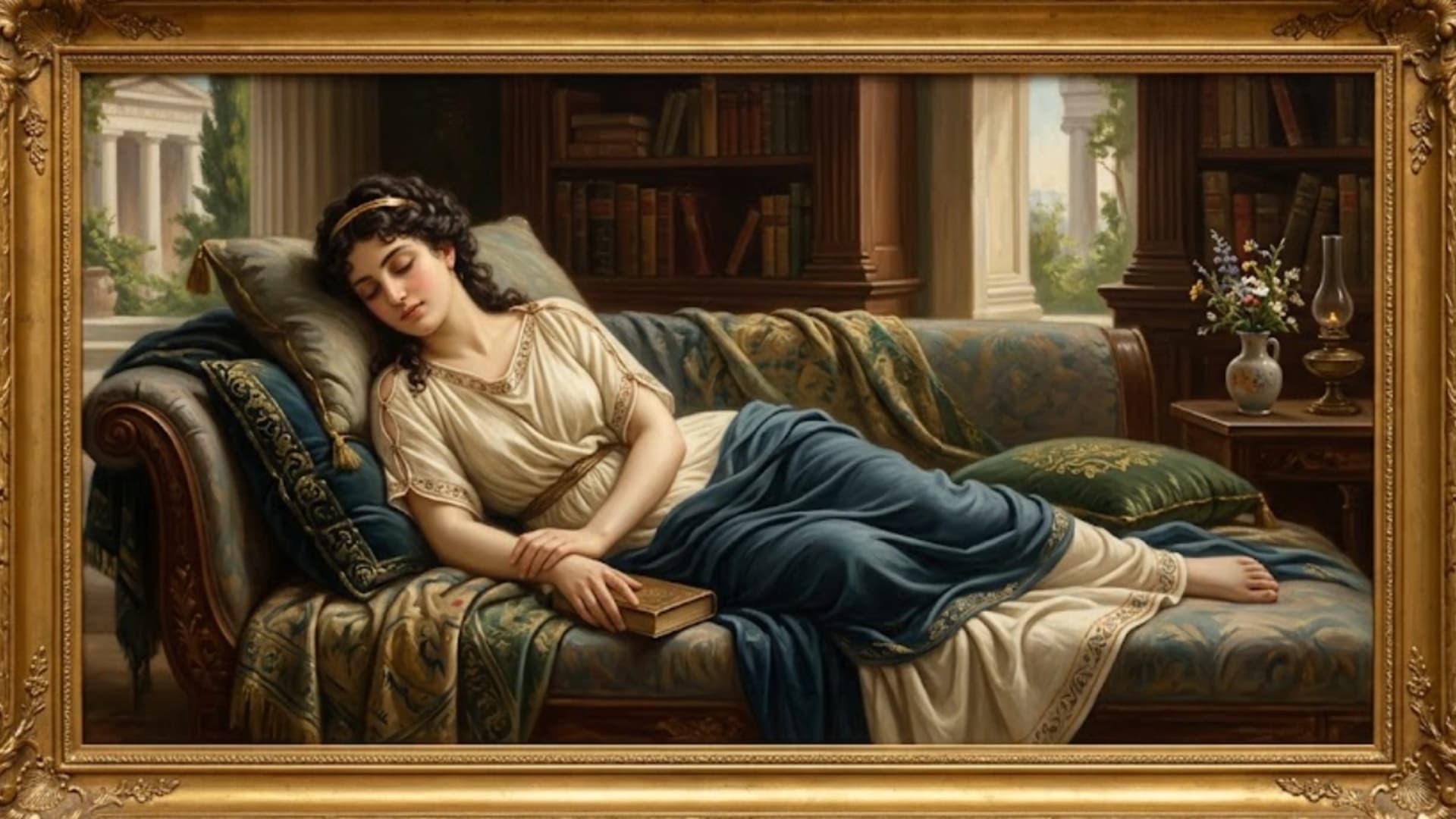
Pre-Raphaelite cheeks.
Soft symmetry. Romantic structure. “Natural clarity.”
Tutorials returned.
Blush maps replaced warning maps.
Glow became calm again.
Serphace became something people remembered incorrectly having been afraid of.
In hospitals, nothing changed.
ACVS remained.
Unresolved. Ongoing.
In feeds, everything changed.
Again.
And somewhere, a hand held another hand in a fluorescent room.
No camera this time.
No interpretation.
Just breathing that did not resolve into meaning.
The world did not end.
It simply stopped looking at what it could not keep naming.