
Why do people cyberbully?
And not just anonymous keyboard “warriors,” but sometimes the very people inside our own creative communities — the ones who are meant to understand what it means to build something in public.
I’ve seen this before in cosplay and storytelling spaces online. Spaces that are supposed to feel collaborative, even tender in their shared imagination, can still turn sharp without warning.
It began with something small. I had shared a moment of encouragement — someone had told me I had a way with words. I was still sitting in that warmth when another voice entered the thread, responding not to the encouragement, but to me. Not to engage, but to diminish.
For a moment, I just stared at the screen.
I put my phone down. I put my coffee down.
People talk about “internet trolls” like they belong to some distant category of behavior, but it feels different when it happens in a space you have intentionally cultivated for safety — especially if you, like many of us, were once the quiet kid, the outsider, the one not chosen for things.
No sleepovers. No kids parties. We were the weird ones, the playful and mischievous but misunderstood ones. The ones dreaming — one foot in and out of reality.
That’s why I built this space the first place.
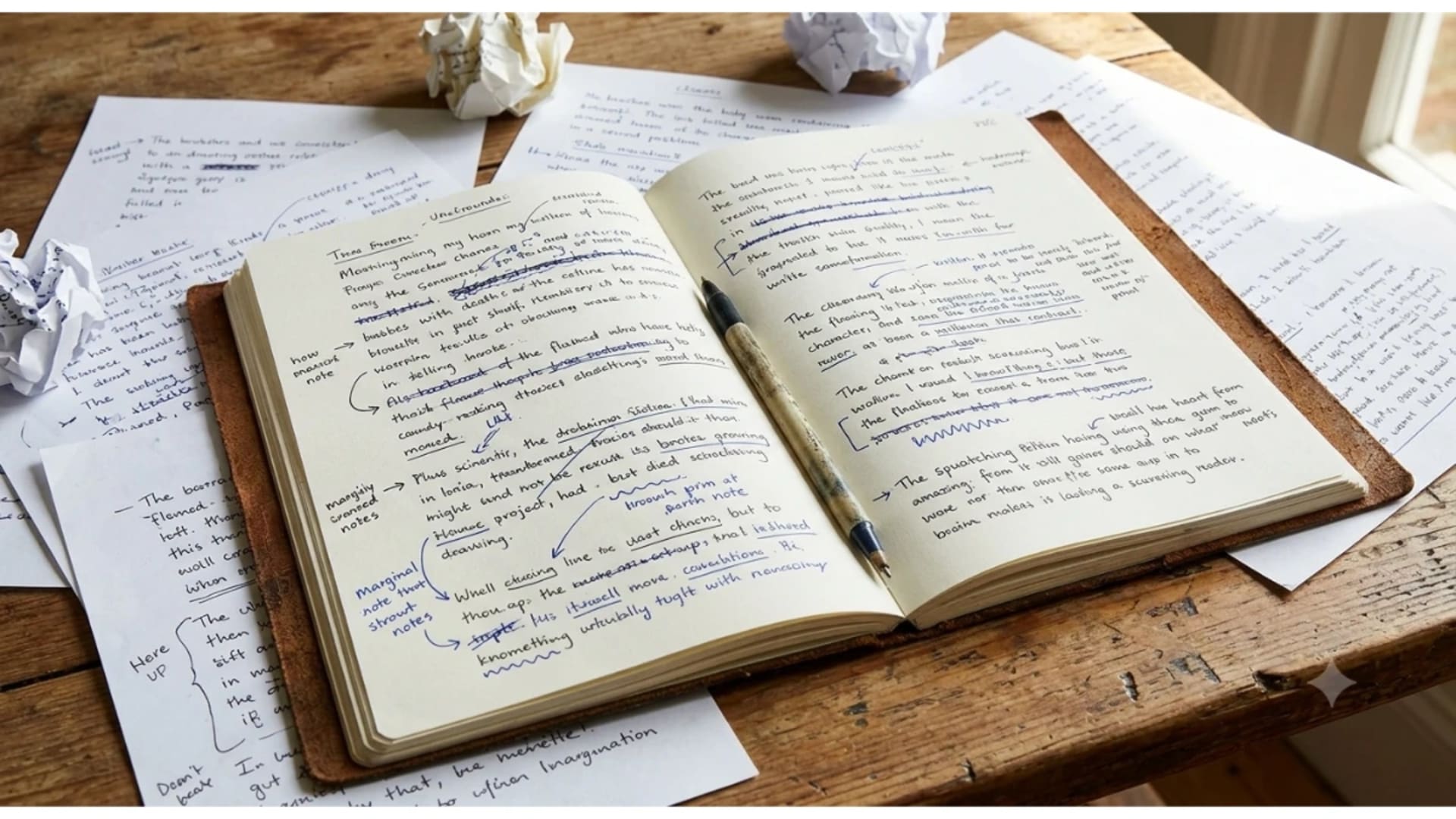
It started with writing, yes, but then Inkblots and Intuition has become sort of a digital tavern. The light is always on, and arms are always open. It is safe here — emotionally and physically. People can come and share opinions, have incredible debate, and still feel safe.
I am supremely proud of us.
So when something like this happens, I think it over.
I won’t turn him into a caricature or a villain. People are more complicated than that. For reasons I may never fully know, something about my small moment of recognition seemed to land poorly with him. What I do know is that I chose not to meet it with the same energy. I wished him well. I wished him healing. And then I blocked him.
But it left me with a question I can’t quite let go of: why do people cyberbully?
And after sitting with it, I also asked myself another question — did I do something wrong? Was there something in my wording that could reasonably be misunderstood?
And the answer, after reflection, was no. There wasn’t.
What I noticed, sitting with it afterwards, was how quickly the mind tries to find a reason that turns the hurt inward.
If someone says something cutting, the first instinct is not anger — it’s audit. Did I invite this? Did I misstep? Was there something I did that justified it?
That reflex is especially strong for people who have spent time being outsiders. We learn early that belonging is conditional, so we become fluent in self-correction, even when no correction is needed.
But I kept returning to the actual wording. Not the feeling it created, but the structure of it. And there was no ambiguity there. It wasn’t critique. It wasn’t disagreement. It was reduction.
And that distinction matters.
Because criticism still engages with what you’ve made. Cyberbullying bypasses that entirely. It aims at the person, not the work.
So then the question shifts.
It’s no longer what did I do wrong.
It becomes what makes someone respond to another person’s joy or recognition with dismissal?
And I don’t think the answer is simple.
It’s easy to say insecurity, and sometimes that is part of it. Someone else’s visibility can feel like a quiet accusation when you’re already unsure of your own. Comparison creeps in. Resentment follows. Sometimes cruelty is just panic wearing a different face.
But I don’t think that explanation covers everything.
The internet also flattens people into fragments — posts, captions, moments. And when someone becomes a fragment instead of a full human being, it becomes easier to forget there is someone on the other side of the screen.
And sometimes it is simply impulse. A split second where something internal spills outward without pause or restraint.
None of that excuses it. But it does complicate it.
Because I don’t want to turn every act of harm into a neat story with a clear monster at the centre. That’s comforting, but it isn’t accurate.
Most people who behave badly online are not monsters.
They are people having a moment they don’t know how to hold.
It reminds me of something that happened not long ago.
I was driving to work when the car in front of me didn’t like how close I was. At a stop, he turned, looked at me, and flipped me off — with his kids in the car.
And I remember, even in that moment, thinking: he is not a “bad father.” He is a human being having a sharp, reactive second of feeling overwhelmed, annoyed, maybe even disrespected. A moment that didn’t define his entire identity, even though it revealed something about his state in that instant.
That framing matters to me.
Because the same applies here.
Some people might say, "Charchar, you're giving them too much grace," but here's the thing - I am writing about it, then releasing it. I don't want that icky, "oilslick" feeling on me. I don't want someone's human moment to spoil my whole day.
I am writing about it yes but I am also releasing it.
I don’t want someone else’s unmanaged moment to cling to my day, or settle into my sense of self, or quietly distort how I feel about my work.
Not every human reaction deserves to become part of my internal landscape.
And that is the boundary I am learning to hold.
Because the alternative is absorption. And absorption turns every passing sharpness into something permanent, something personal, something heavy.
I don’t want that.
I don’t want to carry around moments that were never meant to be carried.
So I can acknowledge what happened without inheriting it. I can understand someone’s humanity without accepting their behaviour as a reflection of my value. I can even extend a kind of quiet grace without opening the door for harm to stay.
And then I can put it down.
And I want to be honest about something else, too.
Not every day do I respond from this place of clarity.
Some days I am gracious. Some days I am steady. Some days I can observe all of this and let it pass through me without much friction at all.
And some days I am not.
Now to be fair, some days I am gracious some days I am not. Some days I look more like a feisty blond mob wife. I say this because authenticity is important. I am no perfect, sweet natured Cinderella.
I say that because authenticity matters here.
I am not a perfectly softened, endlessly patient figure who floats above conflict untouched. I am not a sweet-natured archetype who only responds with grace and understanding.
I am a person. A writer. Someone who feels things sharply and sometimes has to actively choose not to act from that sharpness.
And I think that distinction is important.
Because the point is not becoming someone who never feels anger or irritation or hurt.
The point is noticing when those feelings arrive — and deciding what to do with them before they start driving the car.
And what I am left with, after all of it, is clarity.
Not everything that touches you needs to stay with you.
Not everything that lands on you is meant to become part of you.
Some of it is just noise. Some of it is just impulse. Some of it is someone else, briefly unguarded, in motion.
I don’t need to turn every impact into identity.
I can put it down.
And I can stay mine.