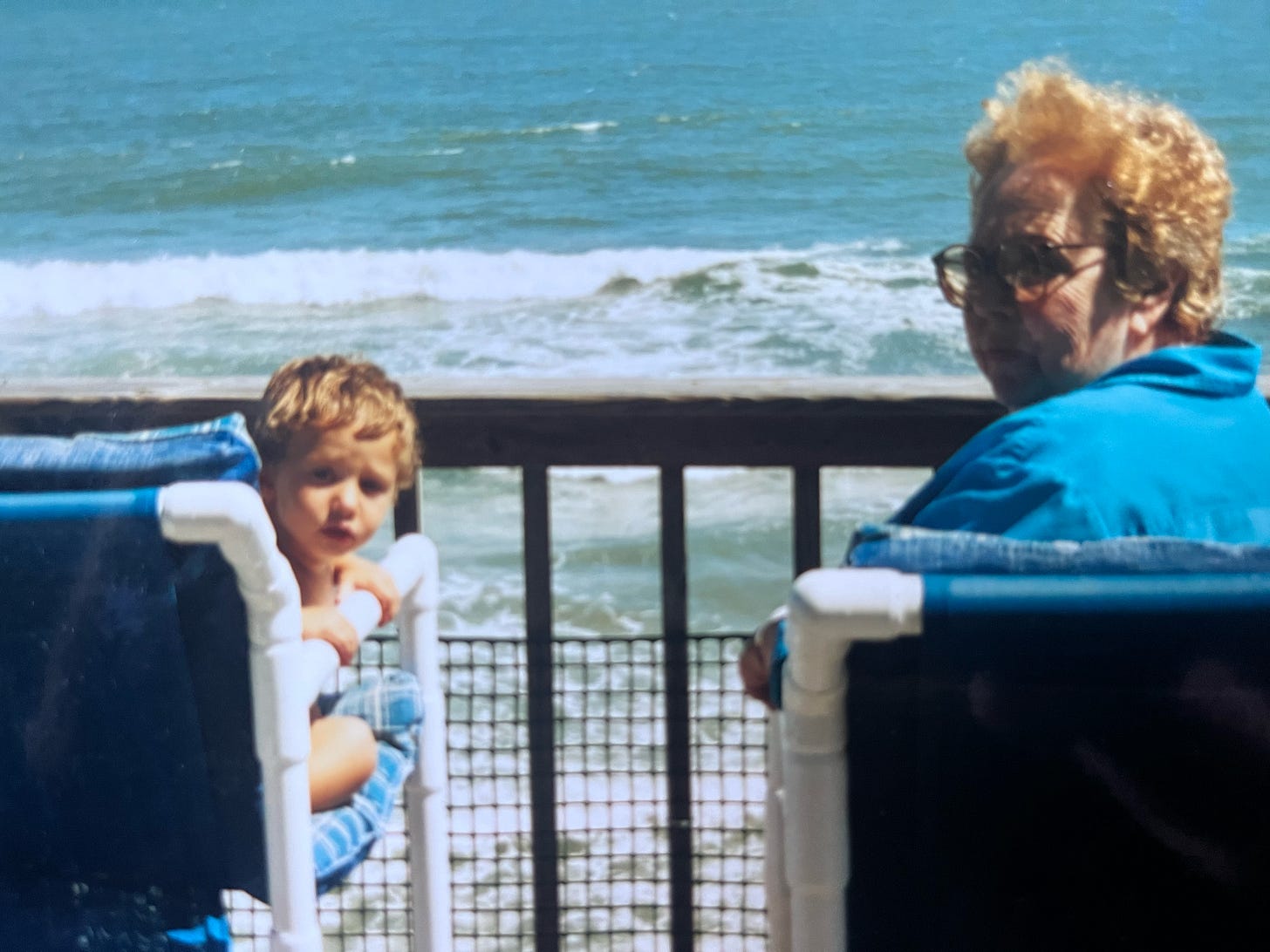
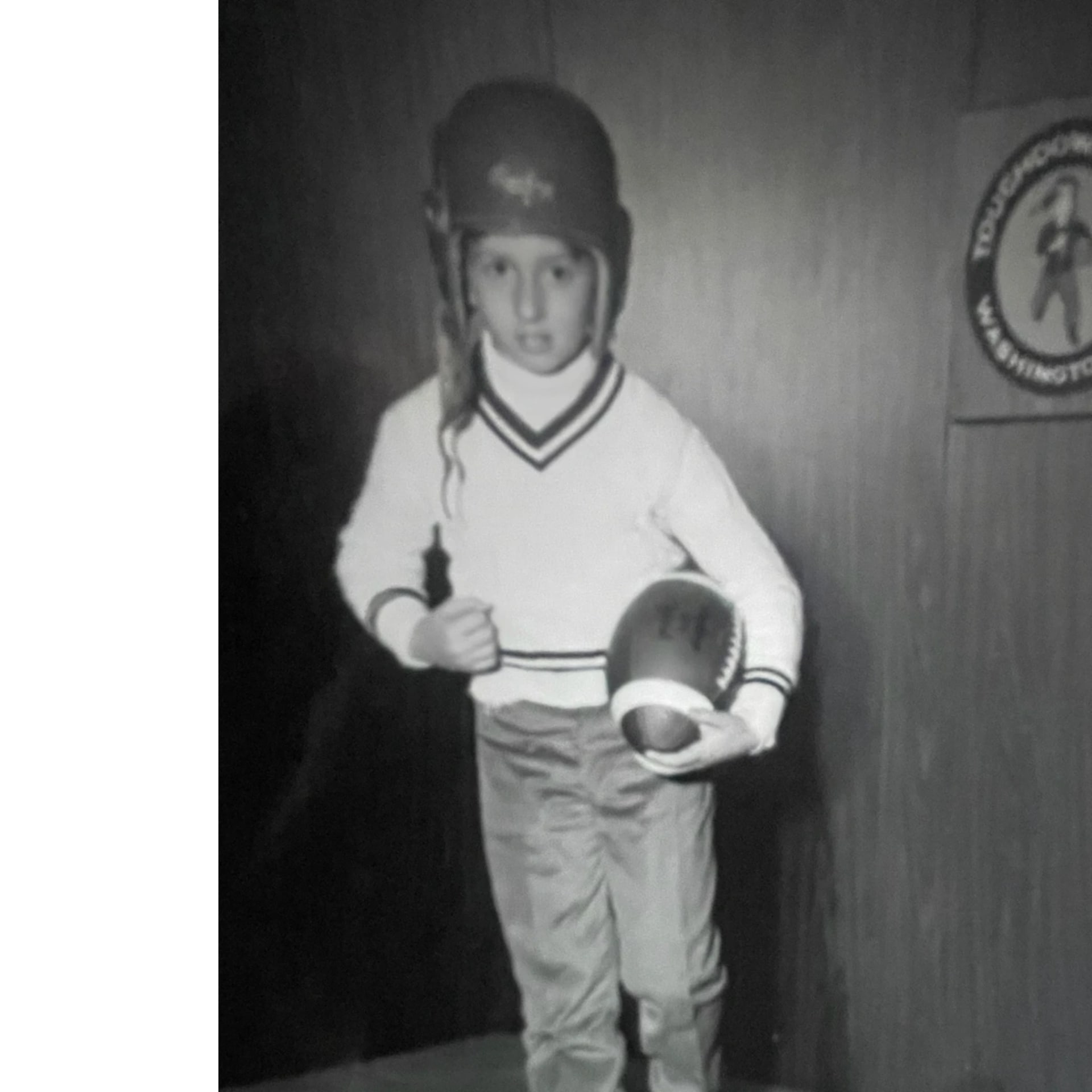
My mom died yesterday. Eventually.
She was two weeks shy of her 97th birthday, and had been suffering from pneumonia for a few days, so all her loved ones were alerted that the end of her time in this particular realm was likely nigh. I got a mid-morning call from Jonathan, the amiable fellow who runs her assisted living home, and when he didn’t start with “Your mother’s fine”—the standard opener for call recipients whose mommies aren’t dead—I figured something was up. According to him she died peacefully in her sleep, as was hoped, and while it was indeed sad this kind, decent woman would no longer be able to laugh at my jokes—and me at hers, right to the end—it seemed a gentle end to a long and almost exclusively gentle life.
I called my sisters, my kids, my cousins and her few remaining living friends, calls that yielded an appropriate amount of laughter and tears. I filled out the form for the news obituary for the Washington Post—few people live 96 years entirely within the confines of the District of Columbia, so I figured they’d be interested. And, because they’re apparently running a month behind in non-A-list-celebrity obits, I set about writing a timelier but pricier tribute to be placed in the newspaper she read her entire reading life. A lifelong bargain hunter, she would have immediately spun in her grave—even though she wasn’t in one yet—had I ponied up the $2,034 the Post wanted for an obit with a color picture, so I settled for black and white. And I think an against-her-will wry smile might have graced her face if she knew I saved $500 on what the funeral home rent-a-rabbi would have cost by gently guilt-tripping the new rabbi at the synagogue she supported for 65 years to perform a graveside service. From now on I’m going to use it as a monetary denomination—if something costs $3,000, I’ll refer to it as six rabbis’ worth.
The house she lived in for 65 years had been sold, her will was in order, she never tired of telling people about her burial plot at Judean Garden, and she’d even lived long enough to see Donald Trump—who she fervently reviled—leave her hometown in disgrace two days earlier. So as much as one can be prepared for such things in the era of Covid, we were. Except for one thing. Turns out she wasn’t dead.
About two hours after the “she passed away” phone call came another, this one from the hospice nurse, alerting me to the fact that, although my mother did not appear to be breathing nor could anyone get a pulse checking her wrist or neck, one of the machines used to tell if someone’s alive or dead apparently and suddenly sprang to life, at one point registering 96%, which is well above average, especially for the presumably expired. They switched machines and got the same reading, so it wasn’t a techno-failure. Jonathan pointed out my mother was fond of a good practical joke, and perhaps she was so adept she could fashion one from the almost great beyond. As absurd an idea as this was, we realized at this point we had entered a dizzyingly bizarre neighborhood where no explanation could be considered truly out of bounds. I tried to imagine what my mother would think had she been in my shoes, and given the fact that the semi-deceased in question did not appear to be conscious or suffering, I like to think she would have seen the humor in the situation. I kept thinking of scenes in movies like Monty Python and the Holy Grail (“I’m not dead yet”) and The Princess Bride (“It just so happens that your friend here is only MOSTLY dead”), comforted by the knowledge she would find these thoughts almost as funny as I did.
The irony of it all is my mother was, among her many talents, a truly gifted mourner. Having lived so long in one place with a large extended family and several million friends and acquaintances, she spent much of her later years at funerals and memorial services, attending even for those who could charitably be sited on the ecto-fringe of her social circle. And though her children made fun of her for it, she wore the mantle of designated mourner proudly. Her belief it was important for her to be there for the dead was a natural extension of the kindness she had always extended to the living. And for a woman who so loved bright colors—the shutters on her house were electric pink—dressing in black so often can’t have been easy.
As the afternoon wore on the calls kept coming—from the hospice nurse, from Jonathan, from the hospice social worker—none of them dispositive. I called a couple of key people to inform them of, with apologies to Thomas Hardy, the apparent return of the DC native. One sister had visited her the day before we thought she died, and another decided to go see her after we found out that, with apologies to Mark Twain, reports of her death had been greatly exaggerated. As hearing is apparently the last of our senses to, with apologies to William Shakespeare, shuffle off this mortal coil, I decided to speak to her via the hospice nurse’s cell phone, further deciding to keep her lifeless final hours out of my visual memory bank. I remembered approaching my grandfather’s open casket decades ago and quickly wheeling away, choosing to remember him alive, a stance from which I have not since budged.
Then, just as I was crafting exactly how I was going to tell the more emotional members of my family their beloved Lillie was in fact not dead, the call came reporting she in fact was. Weird relief washed over me—a poor choice, given what I now know about what’s involved when a person for whom you are the post-death activities coordinator dies. Covid did save me from having to plan a funeral, a dull but definitively silver lining, as I’ve always agreed with Jeff Goldblum’s character in The Big Chill, who called it “an amazing tradition. They throw a great party for you on the one day they know you can’t come.” I think instead we should all throw extra parties for each other while we’re still alive.
My mother was a lovely woman, and you don’t have to take my word for it. Just read all the cards and emails that have come my way since she went hers. It’s the one word almost everyone uses, and even when it’s not explicit it fills all the space between the lines. As fiercely as she loved her large extended family, the baggage it carried weighed down some of those relationships. But her friends all spoke with near reverence of her kindness, humor, and generosity of spirit.
She was always glad to see you, a quality I find zooming up the charts as I age. She was a terrible cook yet somehow an excellent feeder of people. Her one specialty was multi-tiered Jello molds that took shape over days in our refrigerator and then often sat untouched on buffet tables, deemed by partygoers too pretty to despoil by eating. She was a talented calligrapher and ceramicist. My sister-in-law, who didn’t know her well but who is an excellent judge of people, ticked off the things she liked most about my mother in a typically thoughtful email, and one stuck out: “she liked to give gifts to people.” It’s literally true—all of her closets qualified as gift closets—and you couldn’t compliment anything in her house or she’d make you take it with you. But she also effortlessly handed out the gifts of an easy laugh and conversation you didn’t have to work hard to keep alive. And so, despite my firm record of not believing in anything I can’t see or someone else can’t prove, I’m choosing to believe her eight-hour return from the hereafter was not just her final gift, but one she knows her only son considers among the finest of all: a good story.