
Although most of my historical interests boil down to events and characters in contemporary U.S. history, the disappearance of the Roanoke Colony has fascinated me ever since I randomly stumbled upon the Buzzfeed Unsolved video tackling the topic. Even though this event took place 186 years before the United States were even founded, the disappearance of the Roanoke Colony is a widely known historical event in American history that still hasn’t been fully explained. It’s almost become an urban legend, riddled with unexplained occurrences and very few archeological and historical facts to scientifically explain what actually went down. Therefore, join me today to explore this fascinating event and attempt to understand what might’ve happened to 115 people who, allegedly, vanished into thin air.

The first Roanoke Colony was established in 1585 by Sir Ralph Lane, an English explorer who colonised the Kingdom of Ireland in 1583. Founded on Roanoke Island, in present-day Dare County, NC, the colony’s lifetime was riddled with a constant lack of provisions, ongoing hostility with native tribes, and high mortality rates due to varying diseases.[1][2][3] Sir Francis Drake, the famous English explorer, intended on bringing slaves, refugees and hardware to Lane’s colony before heading back to the England after successful raids in Cartagena, Santo Domingo and St. Augustine. However, the difficult conditions and problems that Lane and his colonists faced for over a year prompted them to abandon the colony and sail back home on Drake’s ship.[4]
The second colony, also known as the “Lost Colony,” was Sir Walter Raleigh’s attempt to recolonise the Roanoke Island, now too dangerous for English settlers due to previous conflicts with the natives. The new colony was established in Chesapeake Bay on January 7, 1587, with John White, an English artist, as governor. White’s daughter, Eleanor joined the colony with her husband Ananias Dare. In August 1587, the two welcomed their daughter, Virginia who became the first child born in America to English settlers.[5]
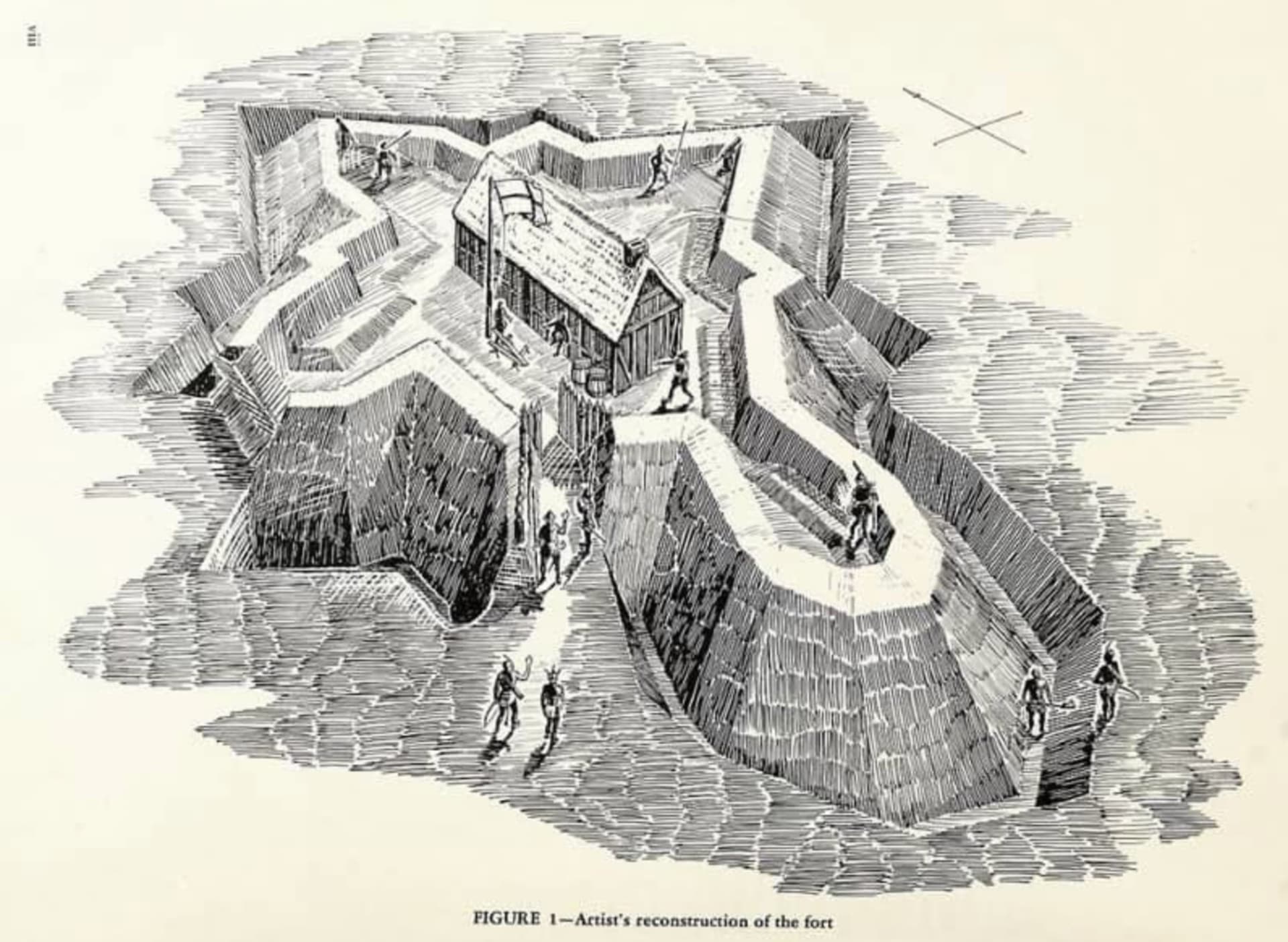
Due to difficult conditions and an overall lack of food supplies, the colony convinced John White to sail back to England and ask Queen Elizabeth for help. After two full months of traveling, White reached England in early November 1587. Despite White’s best attempts to reach the colony as fast as possible, the ensuing war between England and Spain forced Queen Elizabeth to prohibit any ship from leaving England to participate in battles.[6]
Three years later, in summer of 1590, White arranged to go back to the colony aboard John Watts’ ship. Watts’ two ships, Hopewell and Moonlight, anchored on Croatoan Island on August 12, 1590. Three days later, the crew noticed smoke coming from the location of the Roanoke Island. On August 17, smoke was noticed again, but just like two days before, no signs of the colonists were found. In order to attract them, the crew anchored the ships and stayed aboard singing English songs.[7]
On Virginia Dare’s third birthday (John White’s granddaughter), White made landfall, discovering a fully abandoned settlement. The only thing they found were letters “CRO” carved into a tree. Upon reaching the palisade, White noticed the word “CROATOAN” carved into one of the posts. White was sure this was a sign the colony peacefully relocated to Croatoan Island since the colony agreed upon leaving a “secret token” that would let others know of potential trouble in case nothing was previously communicated.[8]

White and his crew discovered that all belongings were taken, alongside White’s personal belongings he left before departure. The colony’s boats were nowhere to be found. Although Hopewell’s crew promised White to come back the next day, the ship’s anchor snapped and the crew was forced to abandon the mission. Despite the fact that Hopewell was supposed to return to the Outer Banks in spring of 1591, the ship was blown off course and forced to sail back to England.[9]
Between 1595 and 1709, six Englishmen went back to the Outer Banks hoping to either find the missing colony or definitively find out what happened to 115 people who vanished. Increasingly, the theory that the colonists were murdered by various native tribes began emerging, as many of the explorers experienced hostility from natives upon their arrival, and Bartholomew Gilbert and his crew lost their lives at the hands of the natives.[10]
In the past 435 years since the colony’s disappearance, numerous theories about what might’ve happened developed. Although no remains were ever found at Roanoke or Croatoan, the theory that the Powhatan tribe murdered the colonists is a very popular one. A powerful native tribe of the Northeastern Woodlands, the Powhatan Confederacy is where the first permanent English settlement in North America was founded. Both the first and the second Roanoke Colony had a tough time keeping up appearances with the neighbouring tribes due to power struggles, varying diseases, and differing faiths. Therefore, it’s not impossible that the hostility became so all-encompassing it transformed into an armed conflict.
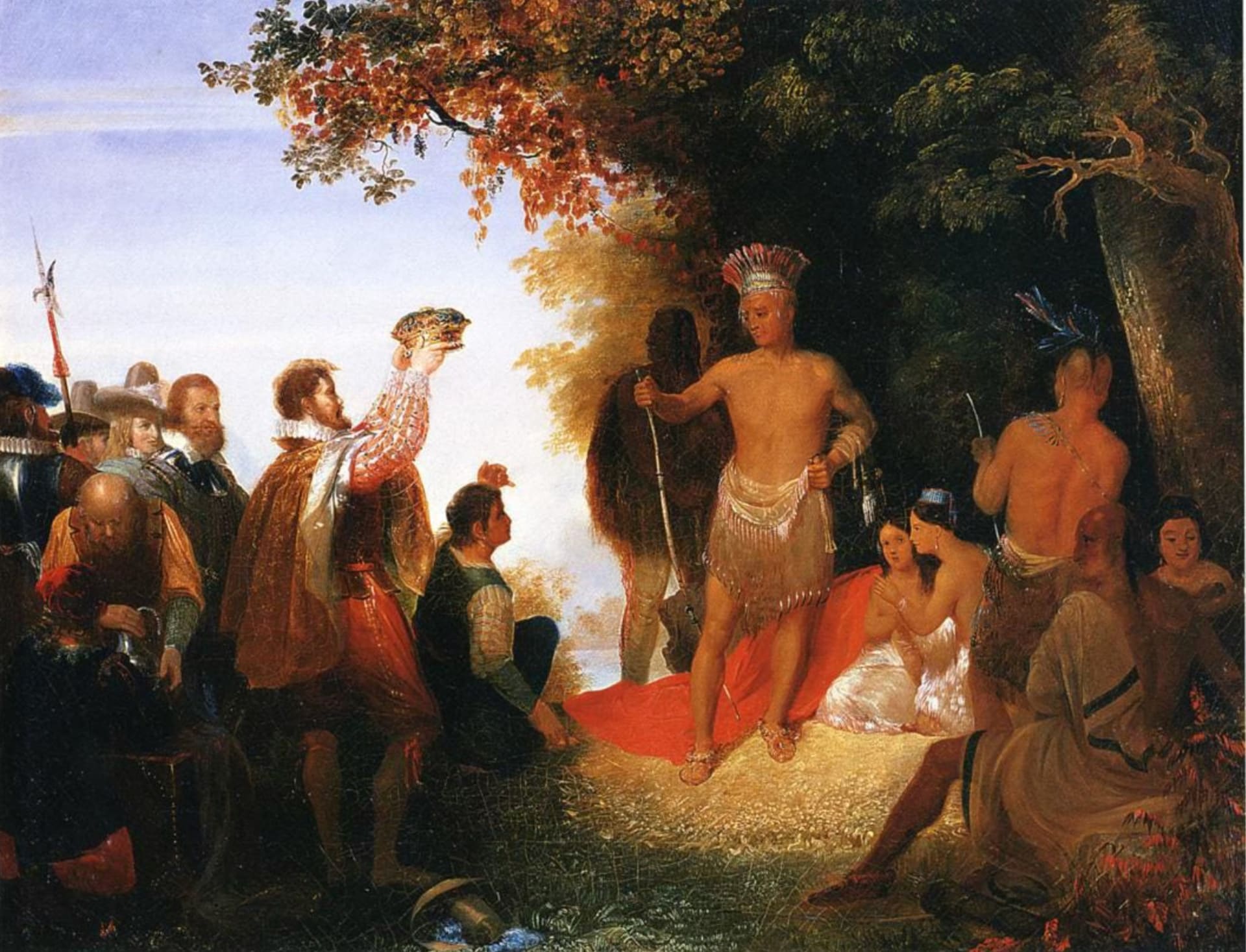
Another popular theory is that the colonists simply assimilated with the neighbouring native tribes after realising White wasn’t to return anytime soon. According to Andrew Lawler who wrote a book in 2018 titled The Secret Token: Myth, Obsession, and the Search for the Lost Colony of Roanoke, if the integration went well, the colonists would’ve soon discarded their European roots and customs, and easily integrated into their new community.[11] Among other plausible theories is also one that considers the colonists might’ve attempted sailing back to England aboard the pinnace left in the 1587 voyage. If that was the case, historians argue the colonists likely died at sea since the pinnace couldn’t have handled the rough conditions of the Atlantic Ocean.
Besides the scientifically viable theories, there are also a few creative ones. In recent years, a theory claiming the colonists were victims of a mass alien abduction started gaining prominence. According to supporters of this theory, a mass alien abduction would explain the lack of remains, as well as prove why the colonists did not leave any substantial clues about their whereabouts. On the other hand, a theory that a zombie virus wiped out the entire colony has gained traction recently. Andre Freeman, a researcher at the Zombie Research Society claims this theory explains well the sudden disappearance. Because Roanoke is an island, the zombie plague would’ve been contained on the island, but it would’ve caused mayhem among the colonists.

Although John Lawson’s expedition to find the Lost Colony in 1709 marked the end of research into the fate of the colonists, the late 19th century and a large part of the 20th century saw a heightened interest in the preservation of the site and research into the area’s climate to better understand how to best preserve the scarce remains of the Lost Colony. In the past twenty years, genetic research has vastly improved and allowed scientists to begin tracing descendants of the colonists. That, however, is only going to be possible once any form of genetic material is found on site.
Whenever something happens under unclear circumstances, an abundance of speculation, conspiracy theories and postulations emerge in an attempt to make sense of what happened. This, inevitably, leads to sometimes outright ridiculous ideas that gain traction exactly for their ridiculousness. In this case, the zombie virus and alien abduction theory have placed this four hundred year old mystery back in the limelight, exploring an event that took place such a long time ago that it turned into a myth, becoming part of the American folklore.
Adrian Masters, a historian at the University of Texas, considers the disappearance of the Roanoke Colony to be “the Area 51 of colonial history.”[12] An event that will likely continue fascinating generations to come due to the inexplicable nature of its demise, the Lost Colony remains an important topic in early American history because it teaches historians of the very first English attempts to colonise the land. The lack of any solid proof of the colony’s fate covers this topic in a veil of mystery that attracts both history buffs and casual history lovers. It’s exactly topics like this that, as a historian, remind me of the beauty of our job - educating people and never stopping to look for the truth.


